

How Ontario’s Attic Insulation Rebate Works: Tiers, Timing & the Cheque
Rebate advertising in the insulation business has a hype problem. You will see big round numbers, the word “free,” and urgency countdowns — and very little explanation of what your specific attic actually qualifies for. Here is the version with no hype, from a contractor that files this paperwork every week.
The short version
Ontario has a home energy rebate program that pays homeowners for insulating under-insulated attics to R-50 or better. The rebate is tiered: the less insulation you have today, the more you get back, to a maximum of $1,250. For attic-only projects there is no home energy assessment required — you book the upgrade, the work gets documented and filed, and the rebate is paid to you after processing.
The tiers, in plain language
Your tier is set by the insulation currently in your attic, measured as an R-value (a score of how well it resists heat flow). A technician can read it from the depth and type of material:
- Up to $1,250 — attic currently at R-12 or less (a few inches of old material; typical for homes built before the 1980s that were never topped up).
- Up to $1,000 — attic currently between R-12 and R-25 (common for 80s and 90s builds with settled builder-grade insulation).
- Up to $800 — attic currently between R-25 and R-35 (newer or previously topped-up attics that still fall short of today’s standard).
- Cathedral ceilings and flat roofs have their own tiers — up to $750 (reaching R-28) and up to $650 (reaching R-20).
All tiers require the finished attic to reach at least R-50; we insulate to R-60 as standard, because the material cost difference is small and the comfort difference is not.
Why “up to” matters
Every honest rebate conversation includes those two words. The amounts above are maximums — your exact rebate depends on your starting R-value and the program’s terms at the time of your application. Any company quoting you a guaranteed rebate figure before anyone has measured your attic is selling, not assessing. We confirm your tier at the free assessment, in writing, before you commit to anything.
What about the bigger numbers you have seen advertised?
Ontario homeowners also see much larger rebate figures in ads — usually tied to whole-home retrofit streams that require a full home energy assessment before and after the work, cover multiple upgrade types, and involve a longer process. Those streams are real, but for a homeowner whose actual problem is a cold second floor and a thin attic, the attic-specific path above is faster, requires no assessment, and covers a meaningful share of a typical top-up. If a whole-home retrofit genuinely fits your situation, we will tell you at the assessment.
The process, step by step
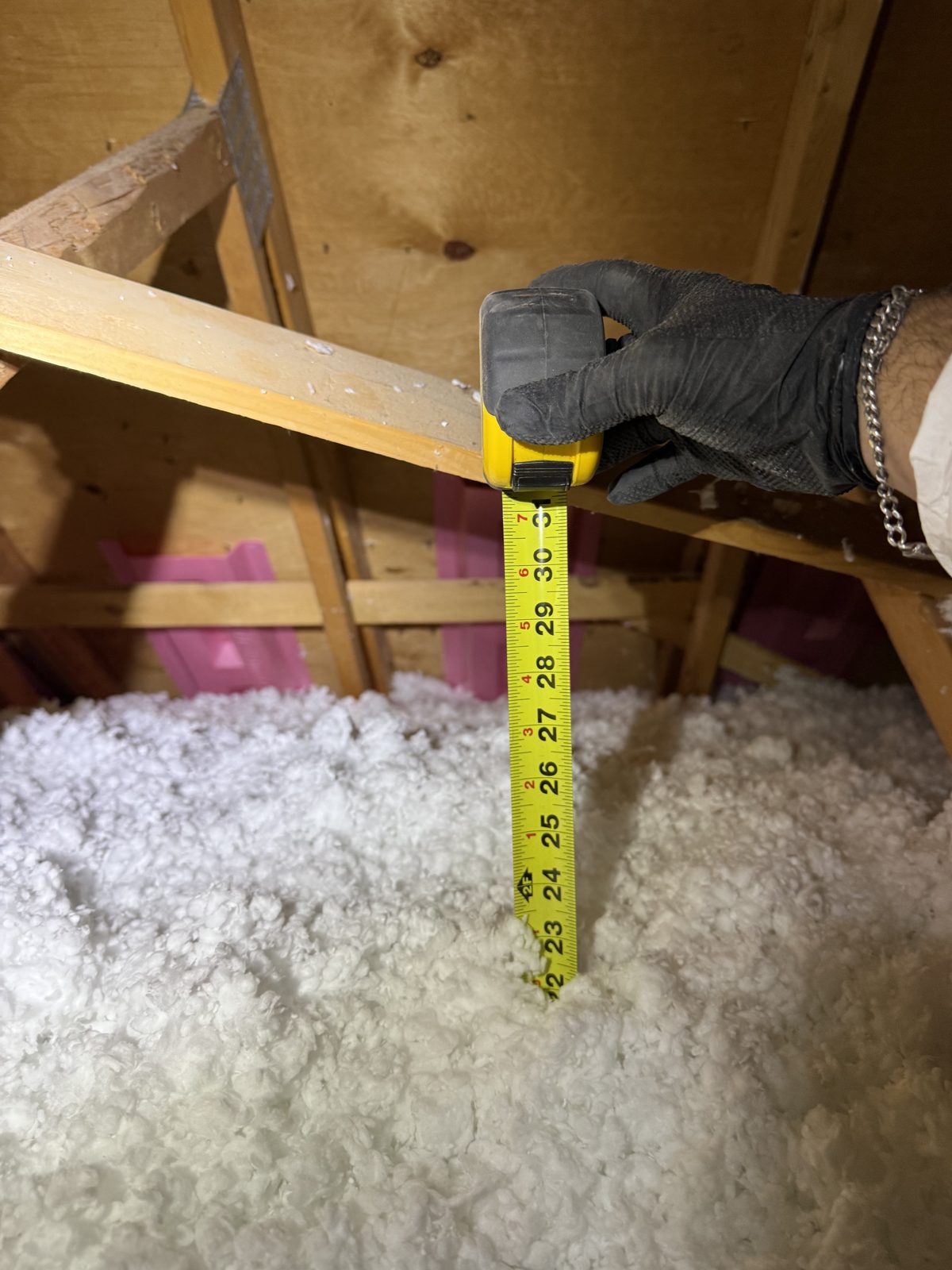
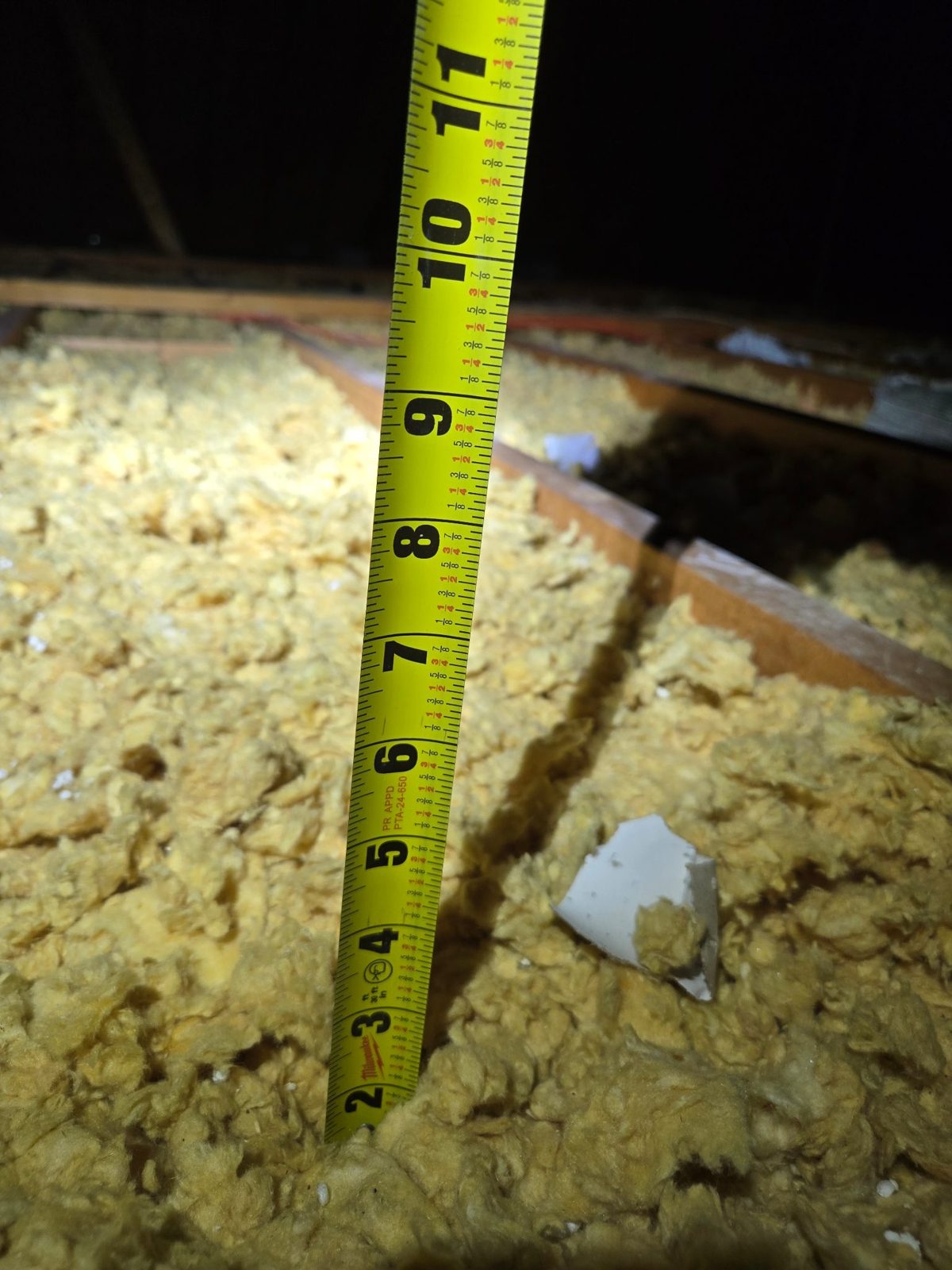
- 1. Free assessment. A technician gets into your attic, measures the current depth and R-value, photographs everything, and confirms your rebate tier on the spot.
- 2. Written quote. Flat price, scope in writing, rebate tier noted. No deposit games, no countdown timers.
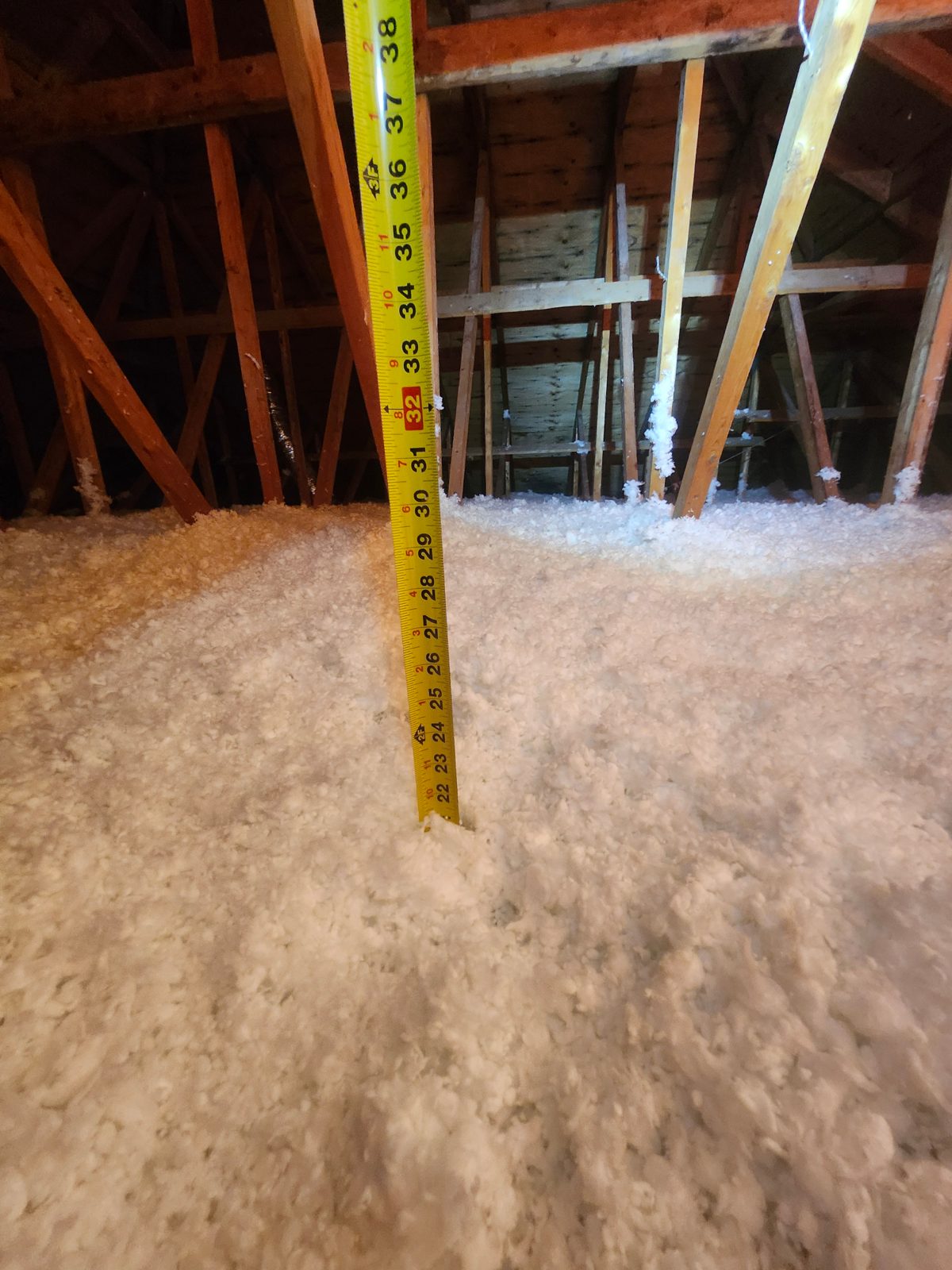
- 3. The work. Air sealing, baffles, venting corrections as needed, then insulation to R-60 — with before-and-after photos documenting the depths for the application. A recent Willowdale project shows the documentation standard: depth ruler before, depth ruler after.
- 4. Paperwork filed for you. We prepare and submit the rebate application with the required documentation.
- 5. You get paid. Once the program processes the application, the rebate is paid to you — it is your money, not a discount we pocket.
Common disqualifiers to know about
The rebate rewards bringing a deficient attic up to standard — so an attic that already measures above R-35 will not qualify for the insulation tiers, and the finished job must genuinely reach R-50+. Work also needs to be documented properly (depth photos, receipts, dates). This is where doing it through a participating contractor pays off: if the paperwork is wrong, the rebate simply does not arrive.
Thinking about it for your home?
The whole thing starts with one measurement you probably do not have: what your attic is at today. That is a twenty-minute, no-obligation visit — and the answer also tells you whether your comfort problem is even the attic at all. Learn more on our attic rebate page, or go straight to booking.
Wondering what’s in your attic?
A free, no-obligation inspection with photos of everything we find — and a straight answer, even if that answer is “your attic is fine.”
Common questions
How much is the attic insulation rebate in Ontario?
Do I need a home energy audit to get the attic rebate?
Who applies for the rebate, me or the contractor?
Do rental properties qualify?
Ali has spent 6 years in GTA attics — inspecting, sealing, and insulating them — and writes from what the crews actually find.