

Air Sealing — The Step That Makes Insulation Actually Work
Insulation slows heat down; air leaks carry it straight past. We seal the pot lights, stacks, ducts, and hatches in your ceiling before a single bag of insulation gets blown — because R-60 over a leaky ceiling is money half-spent.
Your ceiling is full of holes you can’t see
Every pot light, plumbing stack, bathroom fan, duct boot, and wiring run is a hole in the barrier between your heated house and your freezing (or baking) attic. Warm air rises, so in winter your ceiling works like a slow chimney: conditioned air escapes through every gap, and your furnace pays to replace it around the clock. The same leaks carry household moisture into the attic, where it condenses on cold roof sheathing — which is how attics grow mold.
We documented a textbook example in Willowdale: thin, patchy insulation with open penetrations everywhere — every one of them leaking warm, humid house air into the attic. Sealing them first is what made the new R-60 perform.
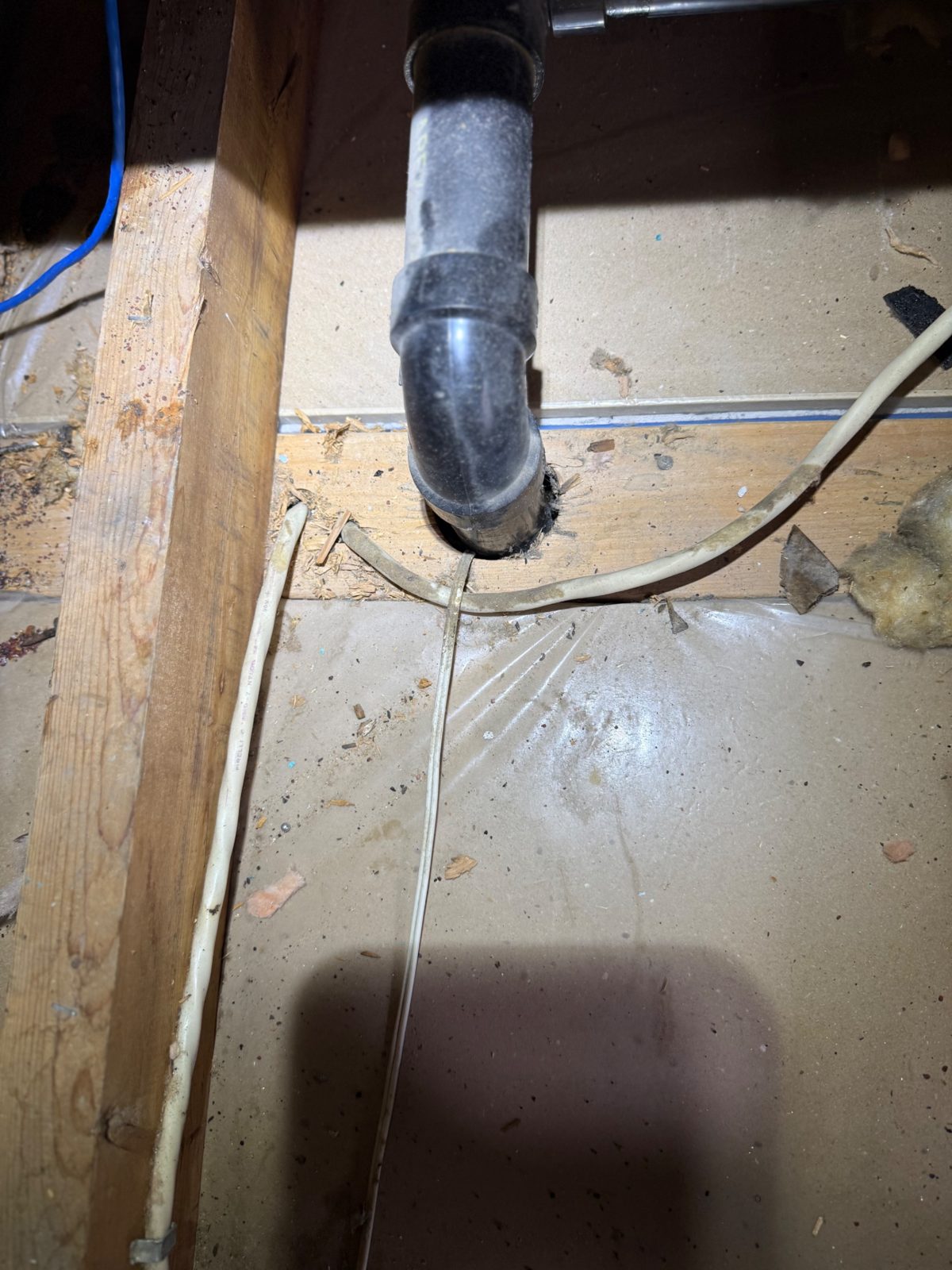
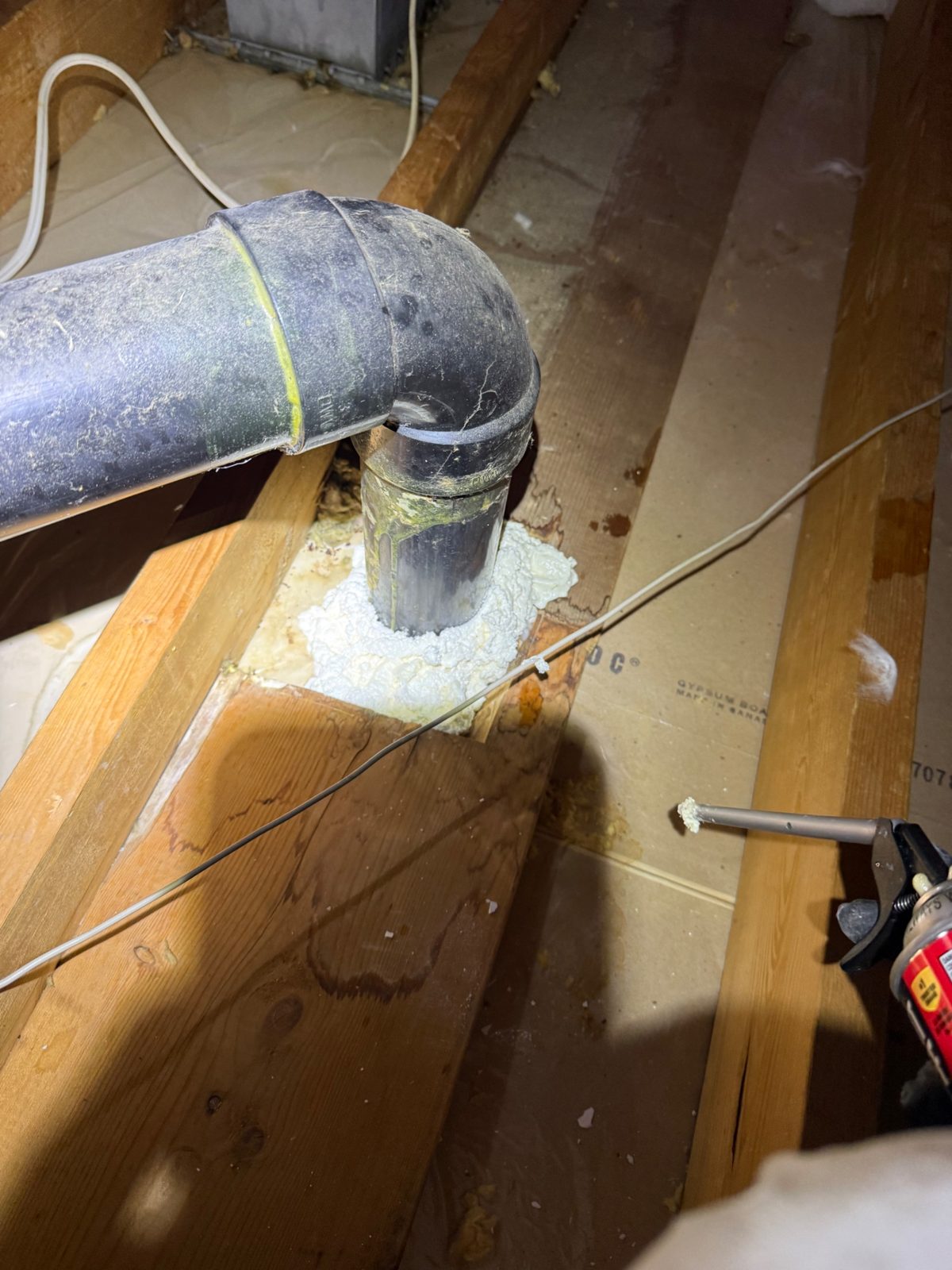
What we seal on a standard attic job
- Pot lights & fixture boxes — sealed with proper clearances and covers (never just buried)
- Plumbing stacks & wiring penetrations — spray-foam sealed at the ceiling plane
- Bathroom fan housings — sealed to the drywall, with the duct verified to exhaust outside (venting into the attic is the #1 defect we find)
- Duct boots & HVAC penetrations — sealed where they pass through the ceiling
- Top plates of interior walls — the long, invisible gaps that leak the most in older homes
- Chimney & flue chases — closed with fire-rated materials where required
- The attic hatch — weatherstripped and insulated; it’s the biggest single hole in most ceilings
Then baffles go in at the eaves to protect the soffit airflow, and only after that does the insulation get blown to R-60.
When the answer is a spray-foam vapour barrier
Much of the GTA’s pre-1980 housing was built with no vapour barrier at all — nothing separating house air from attic air but a layer of plaster. On those homes, patching individual leaks still leaves a ceiling that breathes everywhere, which is how a Lawrence Park attic ended up with 350 sq ft of mold and a musty smell in the bedrooms below.
The fix there — and on many older Toronto homes — is 2 inches of closed-cell spray foam applied across the entire attic floor after removal: a seamless air seal and vapour barrier in one, with fresh blown insulation over top to R-60. It’s the modern envelope a century home never had.
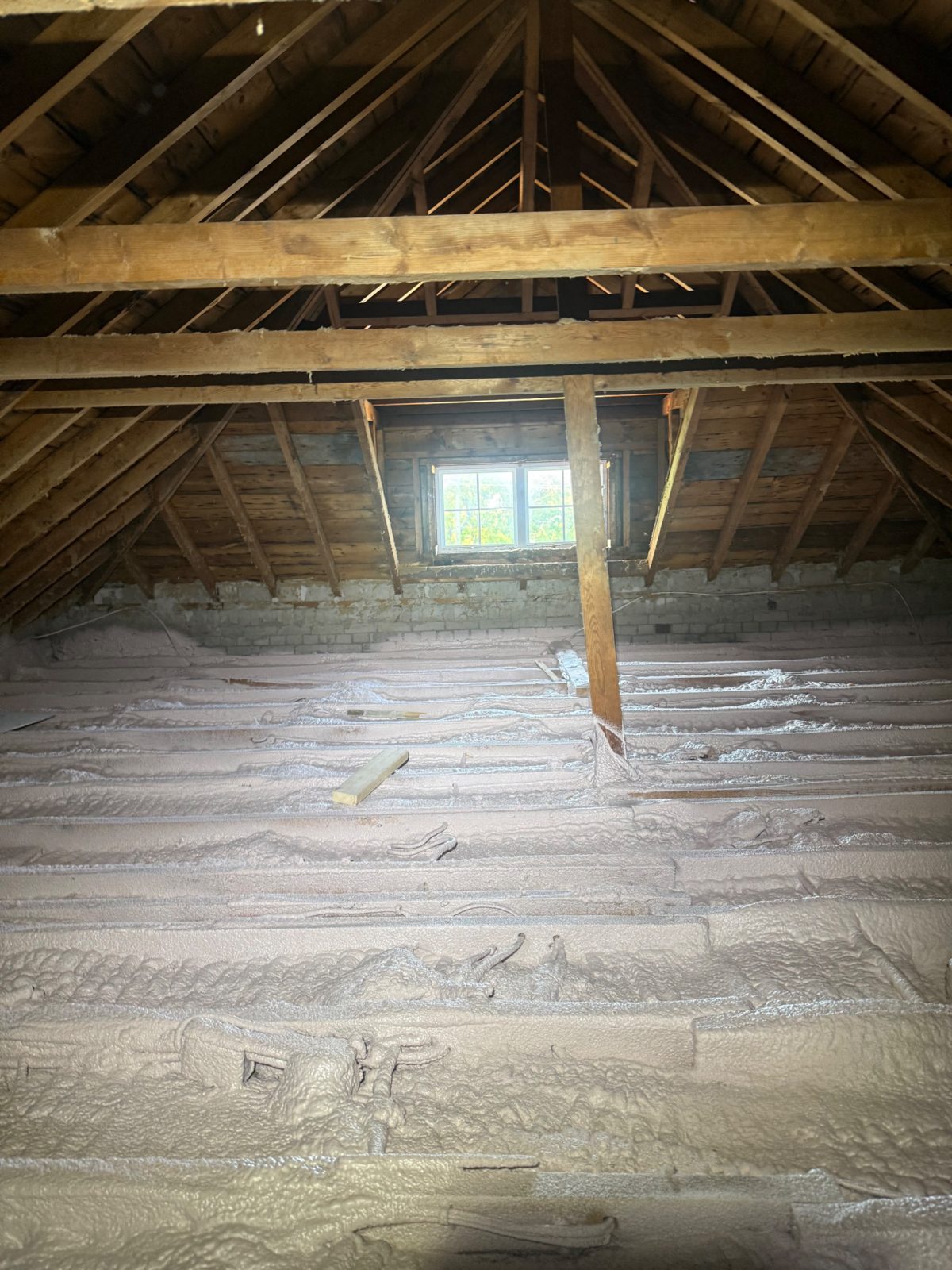
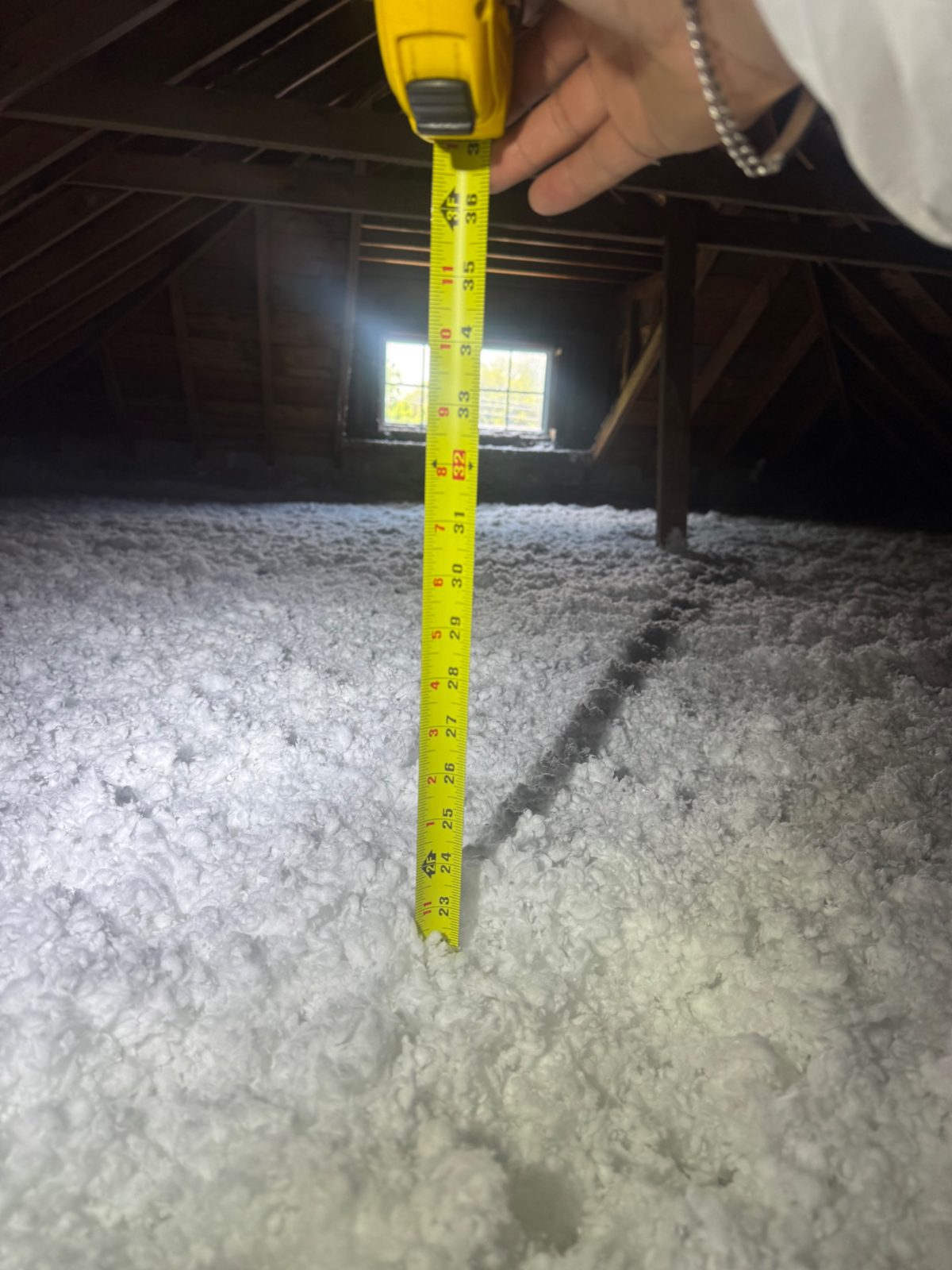
Air sealing pairs with every attic service
With a top-up
Healthy insulation, not enough of it: we seal the penetrations we can access, baffle the eaves, and blow to R-60 over the existing material. One-day job for most homes — see the Churchill Meadows top-up.
With a removal & rebuild
Contaminated or moisture-damaged attics get stripped to bare joists — full access to the ceiling plane — then sealed (often with the spray-foam floor), ventilated, and rebuilt to R-60. See the Mississauga full reset.
Insulating an under-insulated attic to R-50 or better also qualifies for up to $1,250 through Ontario’s home energy rebate program — no energy assessment required for attic-only projects. We confirm your amount at the free inspection and file the paperwork. How the rebate works →
Rebates are offered through an Ontario home energy-efficiency rebate program. Confirmed Attics & Insulation is an independent participating contractor. Rebate amounts shown are maximums; terms and conditions apply, confirmed at your free assessment.
Air sealing, answered
Is air sealing worth it if I’m already adding insulation?
What actually gets sealed?
When does spray foam make sense?
Can you air-seal without redoing the insulation?
Does air sealing help in summer too?
Find out where your ceiling leaks
The free inspection maps the penetrations, measures your insulation, traces every exhaust duct, and photographs all of it — before any quote is discussed.
Book your free inspection
A Confirmed technician visits the property, photographs everything, and gives you a straight answer — free, no obligation.
—
We couldn’t lock that time online. Nothing lost — call (647) 507-4072 and we’ll book you in directly.
—
Tap a highlighted day, then pick a window.
—