

Toronto (Lawrence Park): a musty smell upstairs turned out to be mold on the roof sheathing
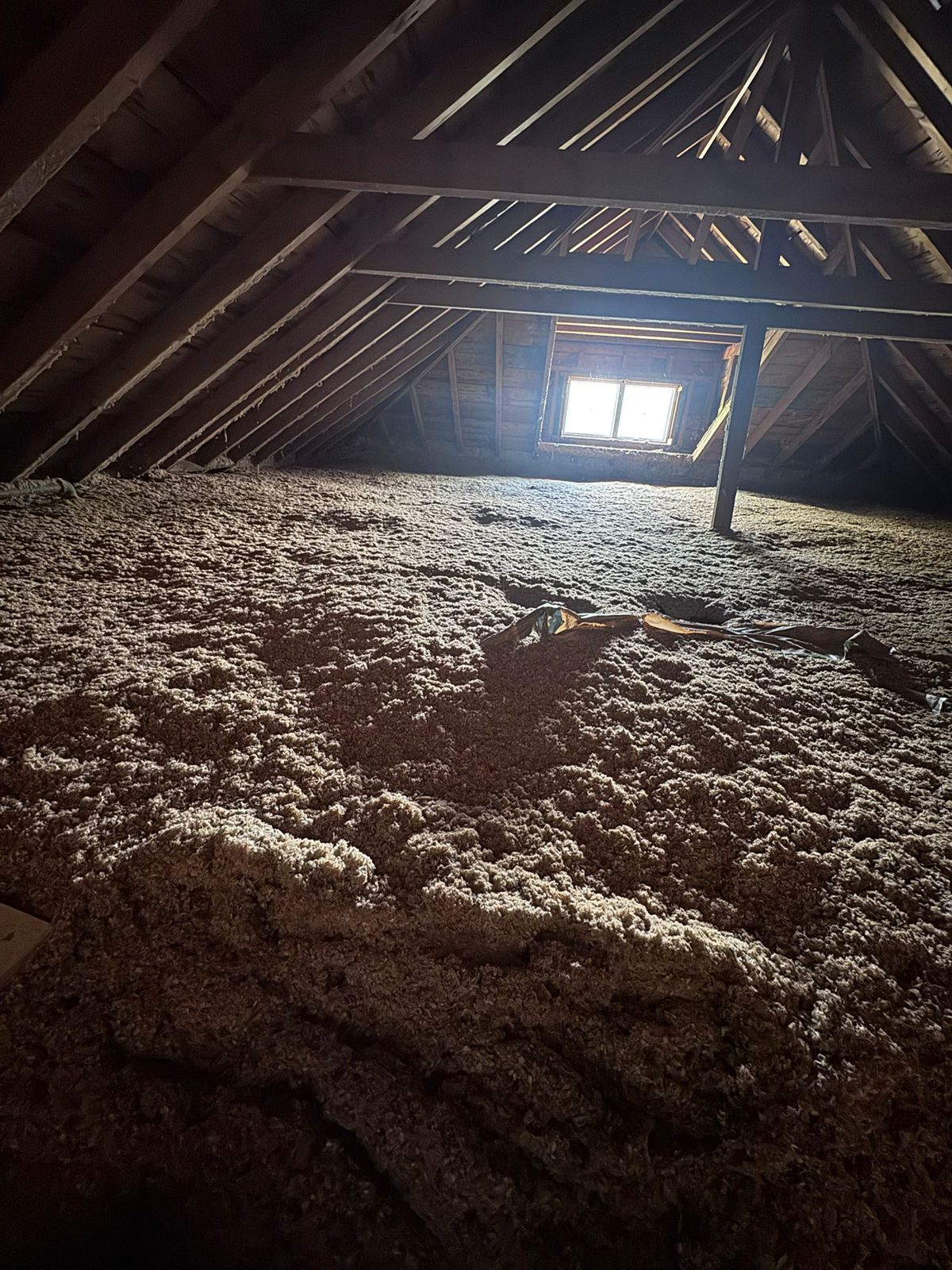
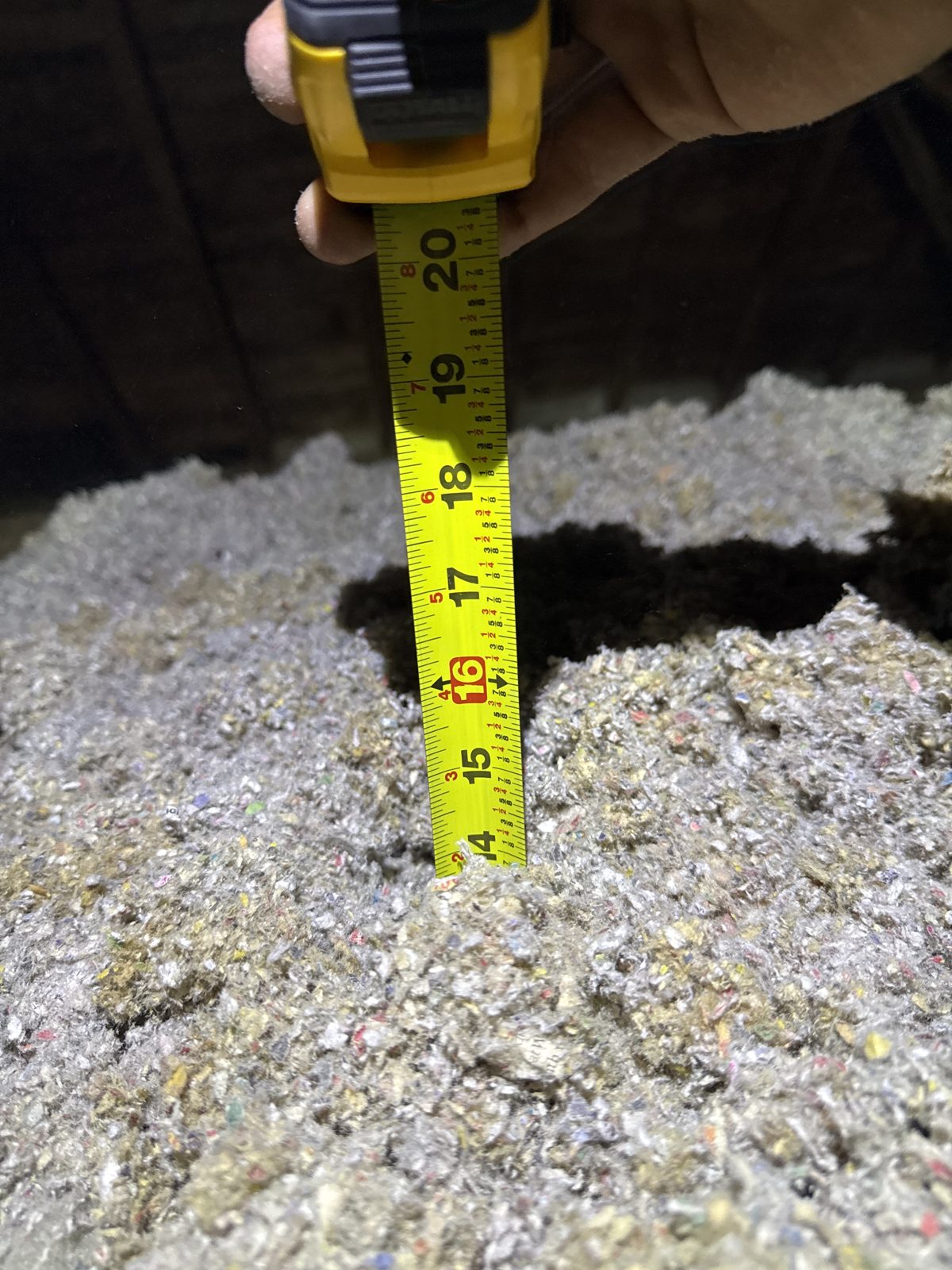
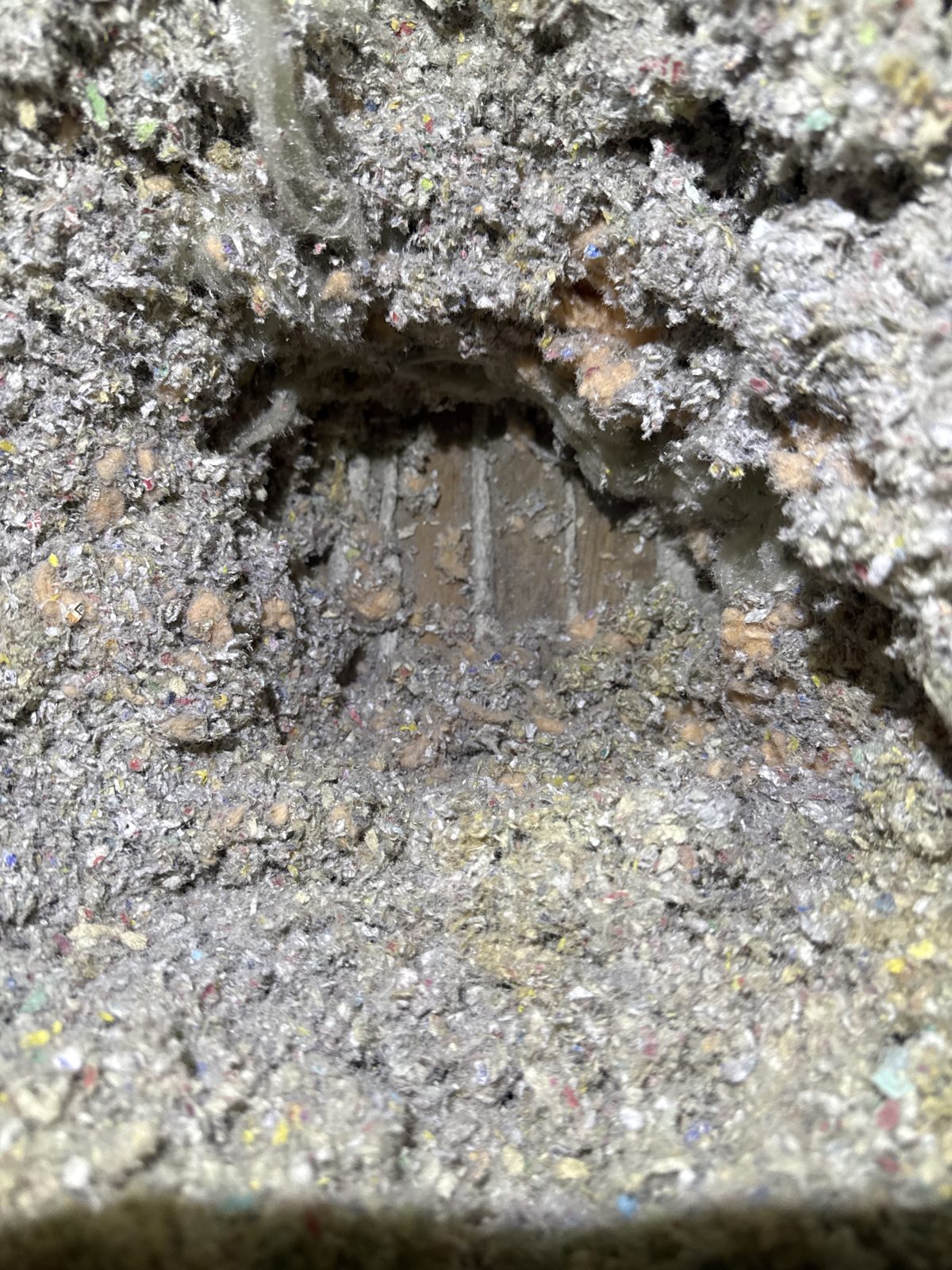
The homeowner noticed a persistent musty odour on the second floor and wanted it checked before it got worse. The house still had its original insulation — decades-old material sitting only a few inches deep over wood lath.
1The Problem
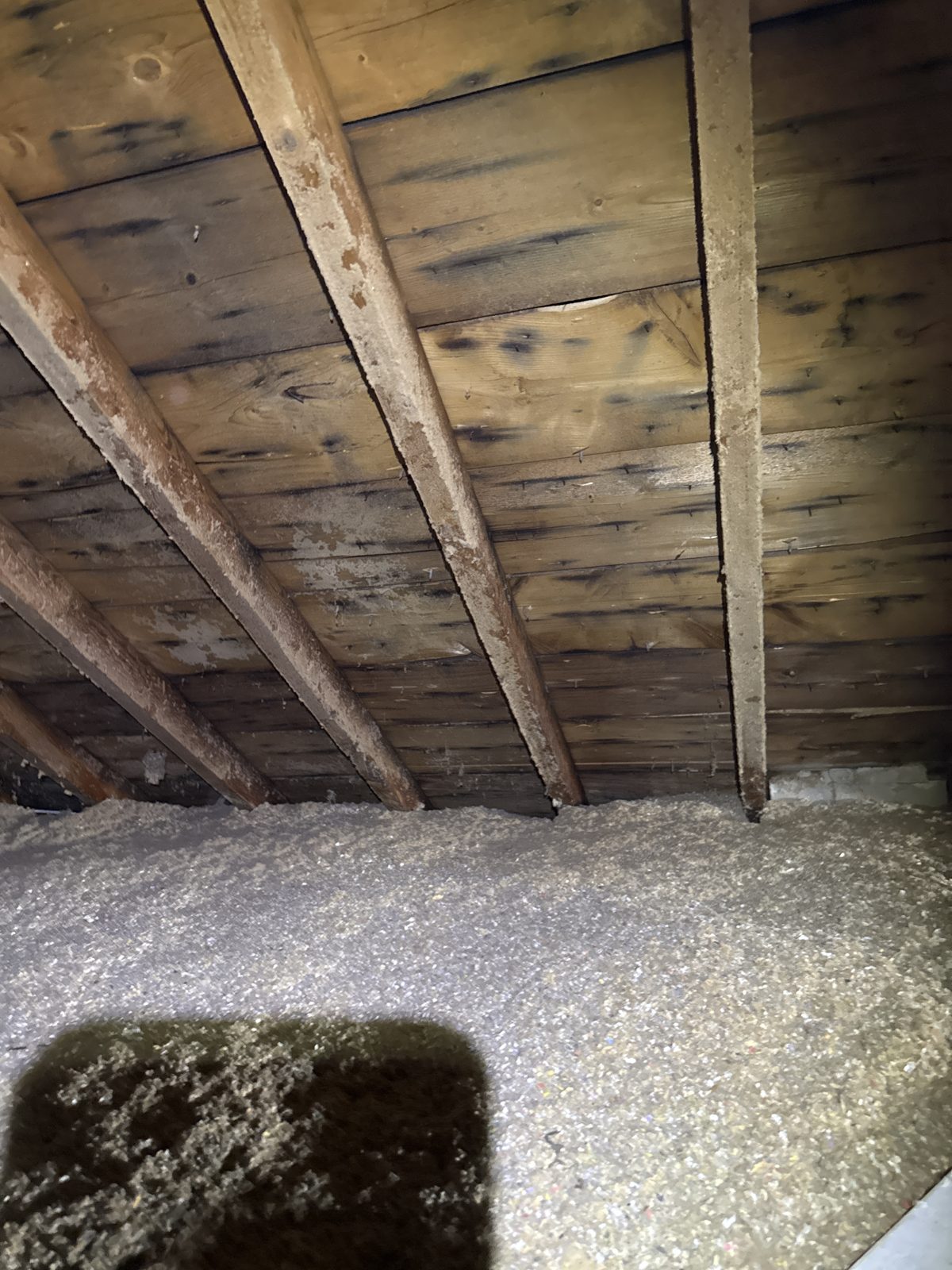
A musty smell with no visible source is one of the most common reasons GTA homeowners call us, and it almost always points up. This attic had no vapour barrier anywhere in the assembly — so attic air, and the musty odour it carried, was leaking straight down into the living space, while household moisture drifted up into the cold attic. Once wood stays damp, mold follows.
2What the Inspection Found
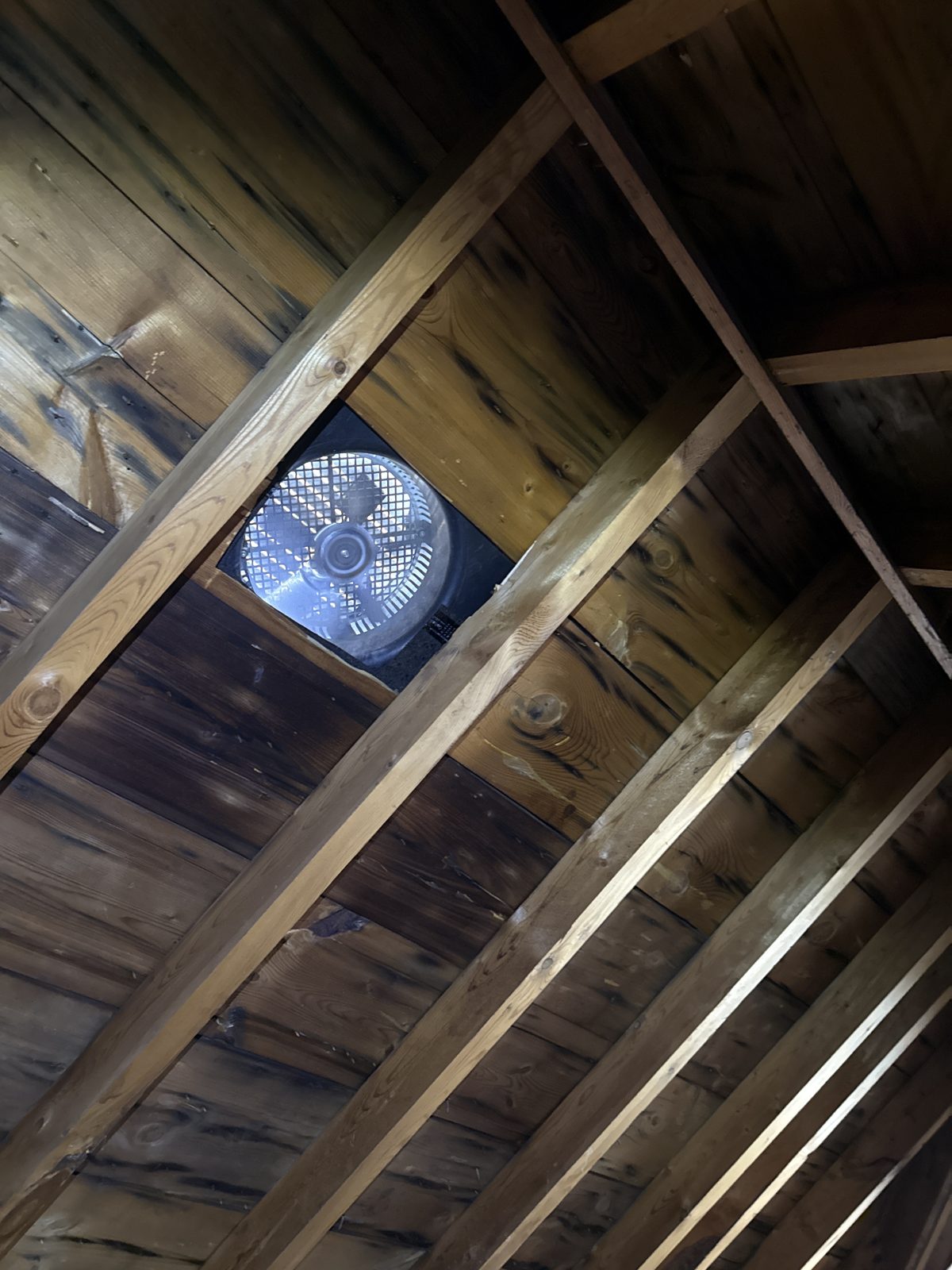
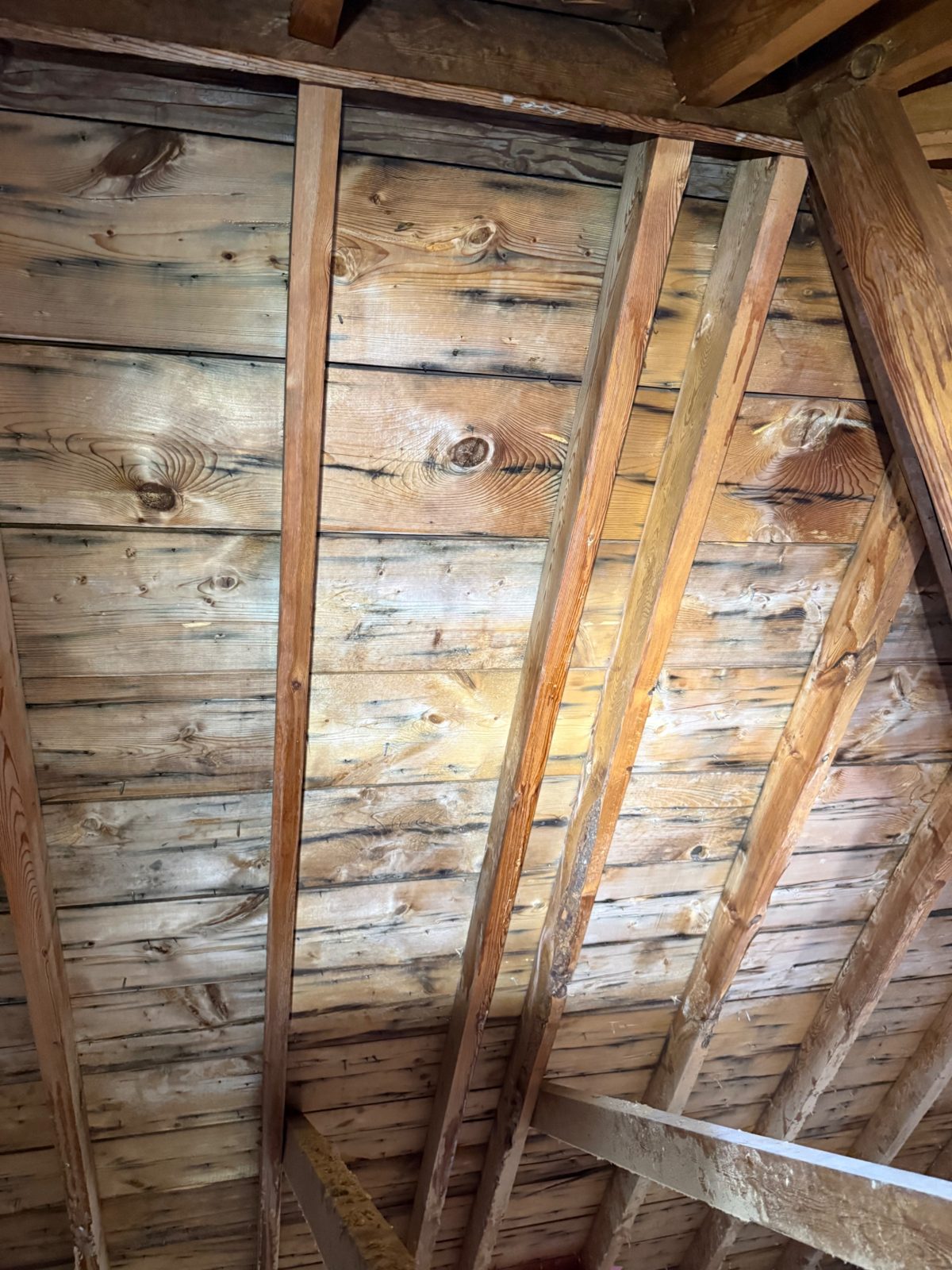
Our inspection confirmed it: mold staining across roughly 350 sq ft of the roof sheathing, insulation far below today’s R-60 standard, uninsulated knee-wall surfaces, blocked intake ventilation, and a bathroom exhaust that wasn’t venting properly to the exterior. And critically — no vapour barrier. With nothing separating the house from the attic, air moved freely in both directions: musty attic air seeping into the bedrooms, warm humid house air condensing on the cold roof. That finding drove the whole plan — it’s exactly why we specified closed-cell spray foam across the attic floor, to seal the ceiling and act as the vapour barrier this house never had.
3How We Fixed It
This attic needed a full reset, not a top-up:
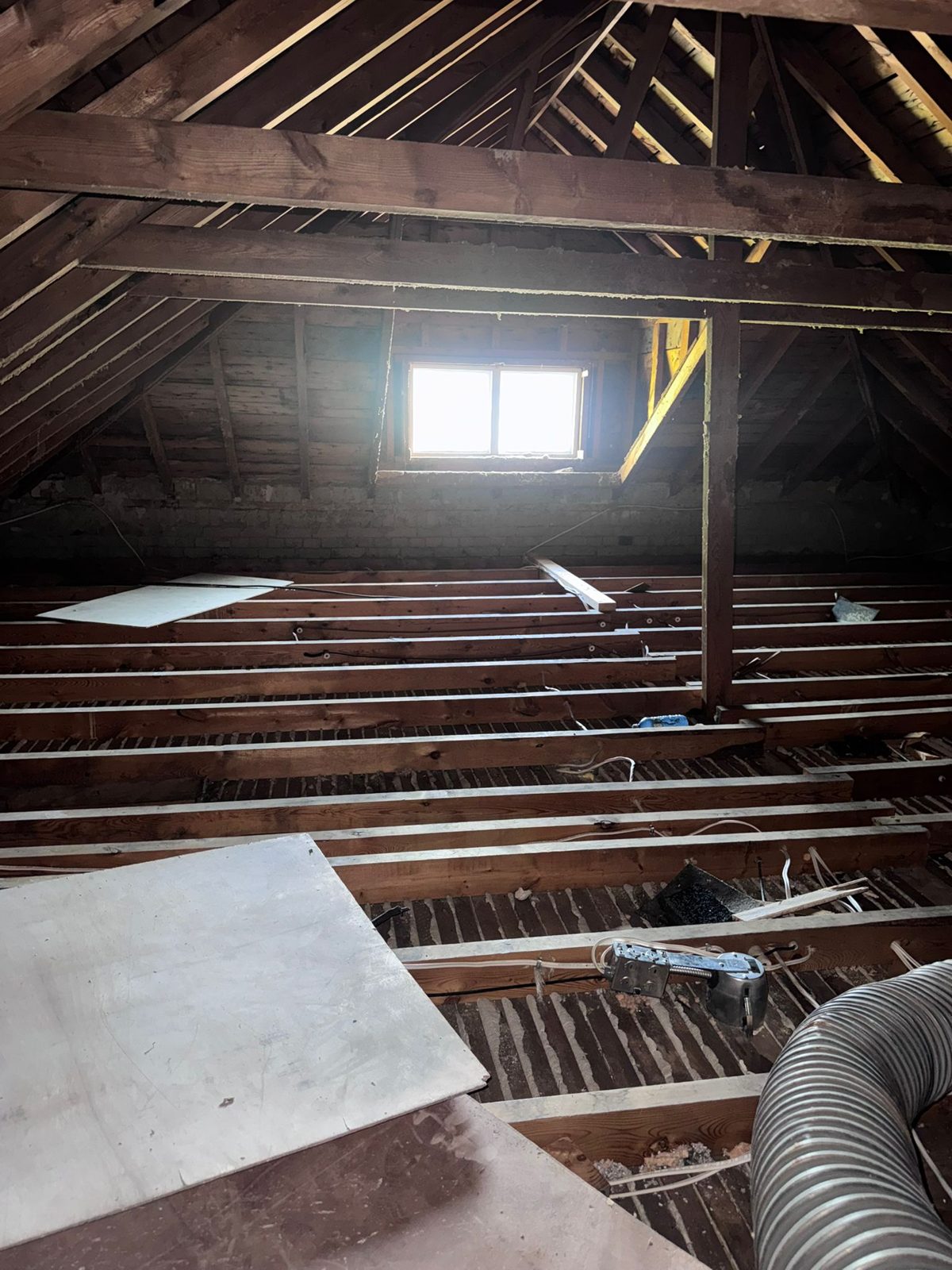
- Removed all 1,000 sq ft of contaminated insulation, bagged and disposed of safely
- Completed our 3-stage mold remediation on the affected sheathing — botanical cleaning and spore removal, wood appearance restoration, and a salt-based protective sealant to resist regrowth
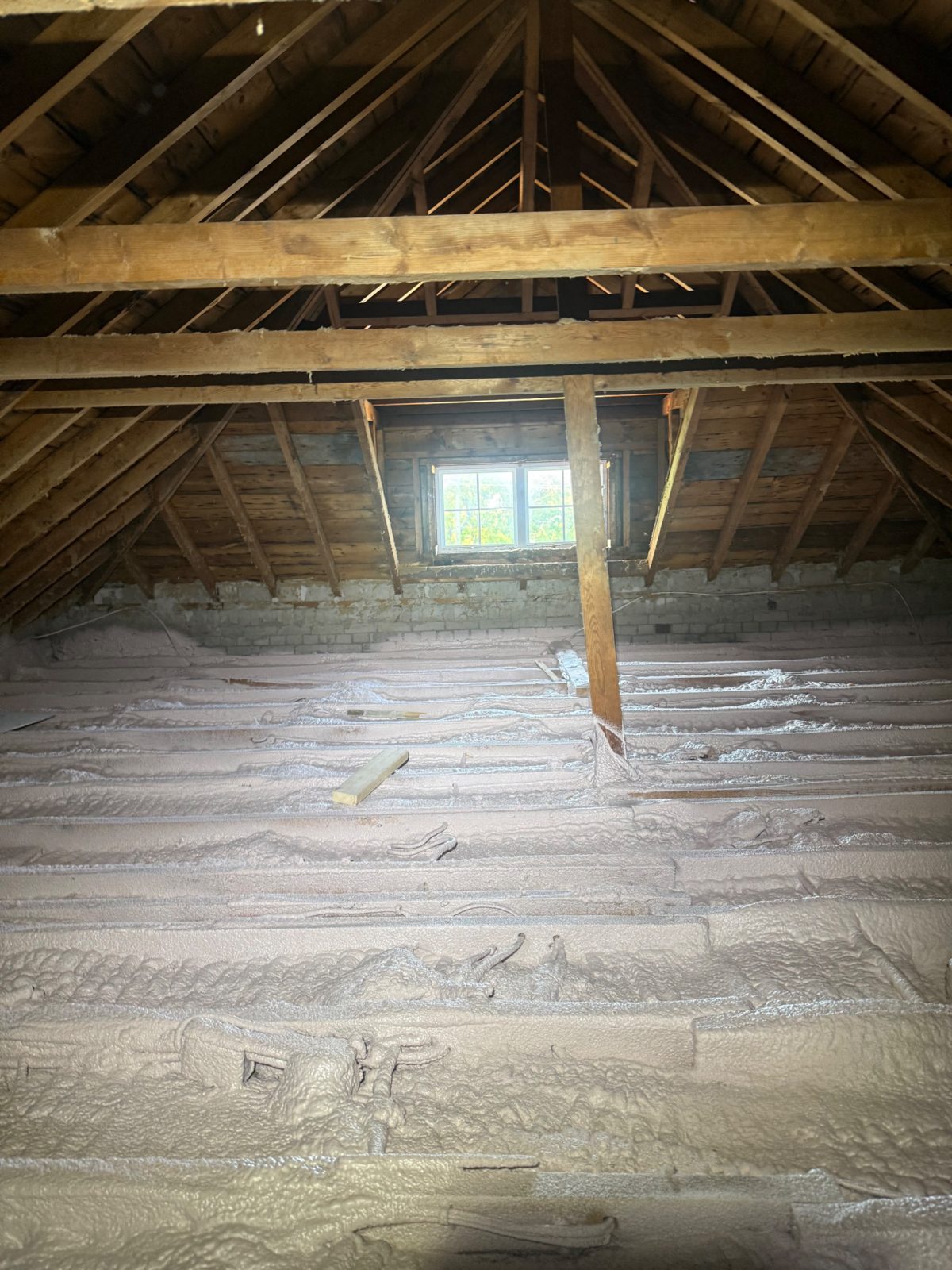
- Applied 2″ of closed-cell spray foam across the attic floor — a seamless air seal and the vapour barrier this attic never had
- Spray-foamed a further 600 sq ft sloped-ceiling section, with the drywall removed and replaced
- Installed 20 baffle vents with soffit cover-up, a tower roof vent, and a dedicated bathroom roof vent so moisture finally exits the house
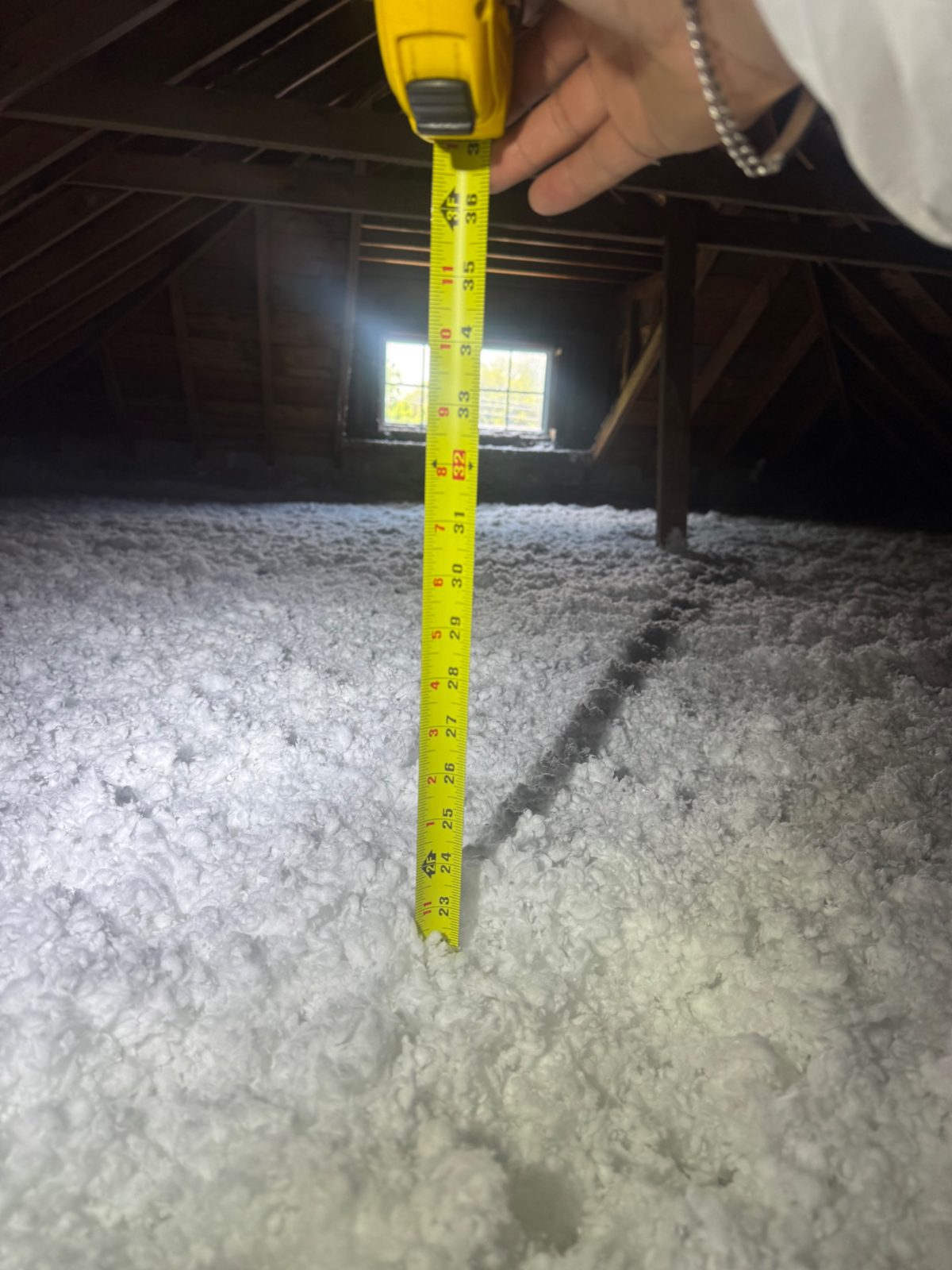
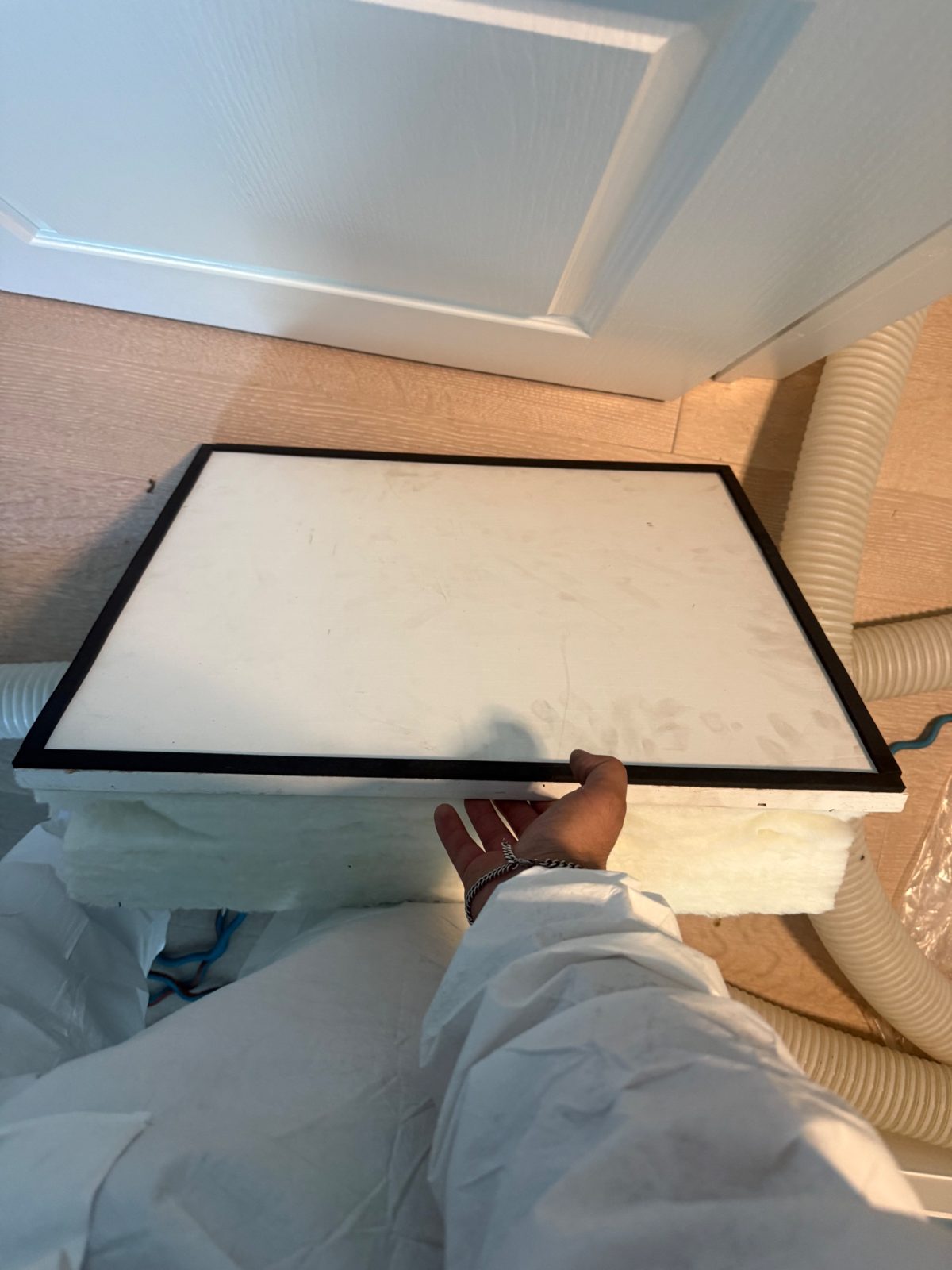
- Fitted a new insulated attic hatch and blew fresh fiberglass up to R-60
4The Result
The musty smell is gone because the cause is gone: the mold was remediated and sealed, the moisture source was rerouted outside, and the new spray-foam vapour barrier keeps house air out of the attic. From a few inches of century-home insulation to a sealed R-60 assembly — covered by our 10-year workmanship warranty.
5The Short Version
In Toronto’s Lawrence Park, a persistent musty smell on the second floor turned out to be mold on the attic’s roof sheathing, fed by decades-old insulation only a few inches deep and ventilation that couldn’t keep up. Confirmed Attics & Insulation removed all 1,000 sq ft of contaminated material, completed a 3-stage mold remediation on about 350 sq ft of sheathing — botanical cleaning, wood restoration, and a protective sealant against regrowth — then applied 2 inches of closed-cell spray foam across the attic floor as a seamless air seal and vapour barrier, plus a further 600 sq ft sloped-ceiling section. Airflow was rebuilt with 20 baffle vents, a tower roof vent, and a dedicated bathroom roof vent, and the attic was blown back to R-60 under a new insulated hatch. The smell is gone because its cause is gone. Completed May 2026; 10-year workmanship warranty.
Wondering what’s going on in your attic?
Every problem on this page was found during a free, no-obligation inspection. We photograph everything, walk you through it, and give you a straight answer — even if that answer is “your attic is fine.”