

Bathroom Fan Venting Into the Attic: The #1 Problem We Find
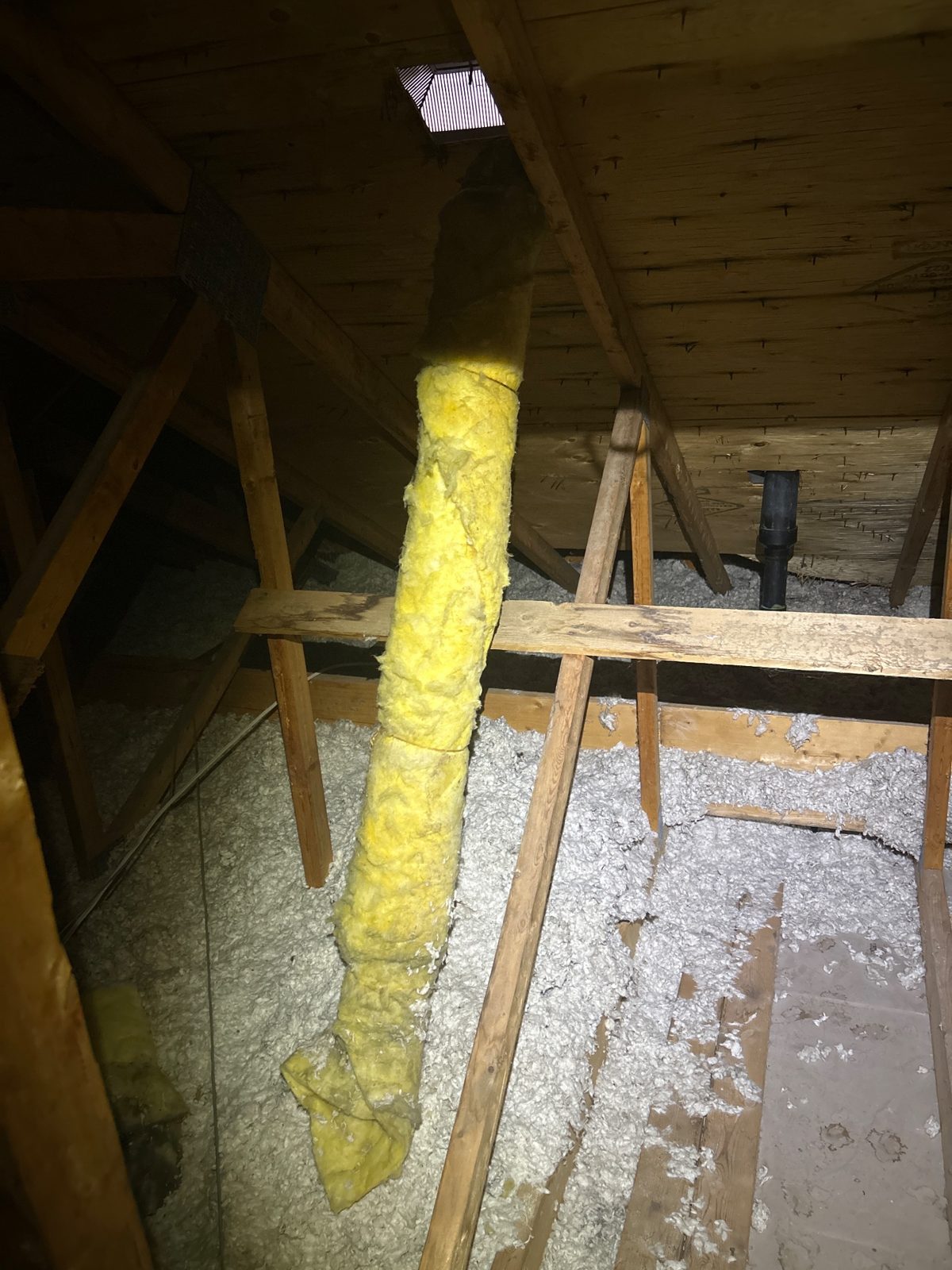
If we could get every GTA homeowner to check one hidden thing about their house this year, it would not be the furnace or the roof. It would be this: where does your bathroom fan actually blow?
Because in an enormous share of the attics we inspect — older homes and newer ones — the answer is “into the attic.” Not outside. Into the insulation, onto the roof boards, every single shower.
Why this one defect does so much damage
A bathroom fan’s whole job is to remove moisture. When its duct stops short of the roof, is disconnected, or was simply never run outside, all of that moisture gets delivered to the coldest part of your house in winter — where it condenses on the underside of the roof sheathing, soaks the top of your insulation, and feeds mold with a fresh supply of water every morning routine.
It is a slow-motion problem. Nothing looks wrong for the first while; then comes staining on the sheathing, matted insulation that has lost its R-value, frost on cold mornings, a musty smell — and eventually a remediation-sized bill for what began as a $200 duct problem.
Two real jobs, two very different bills
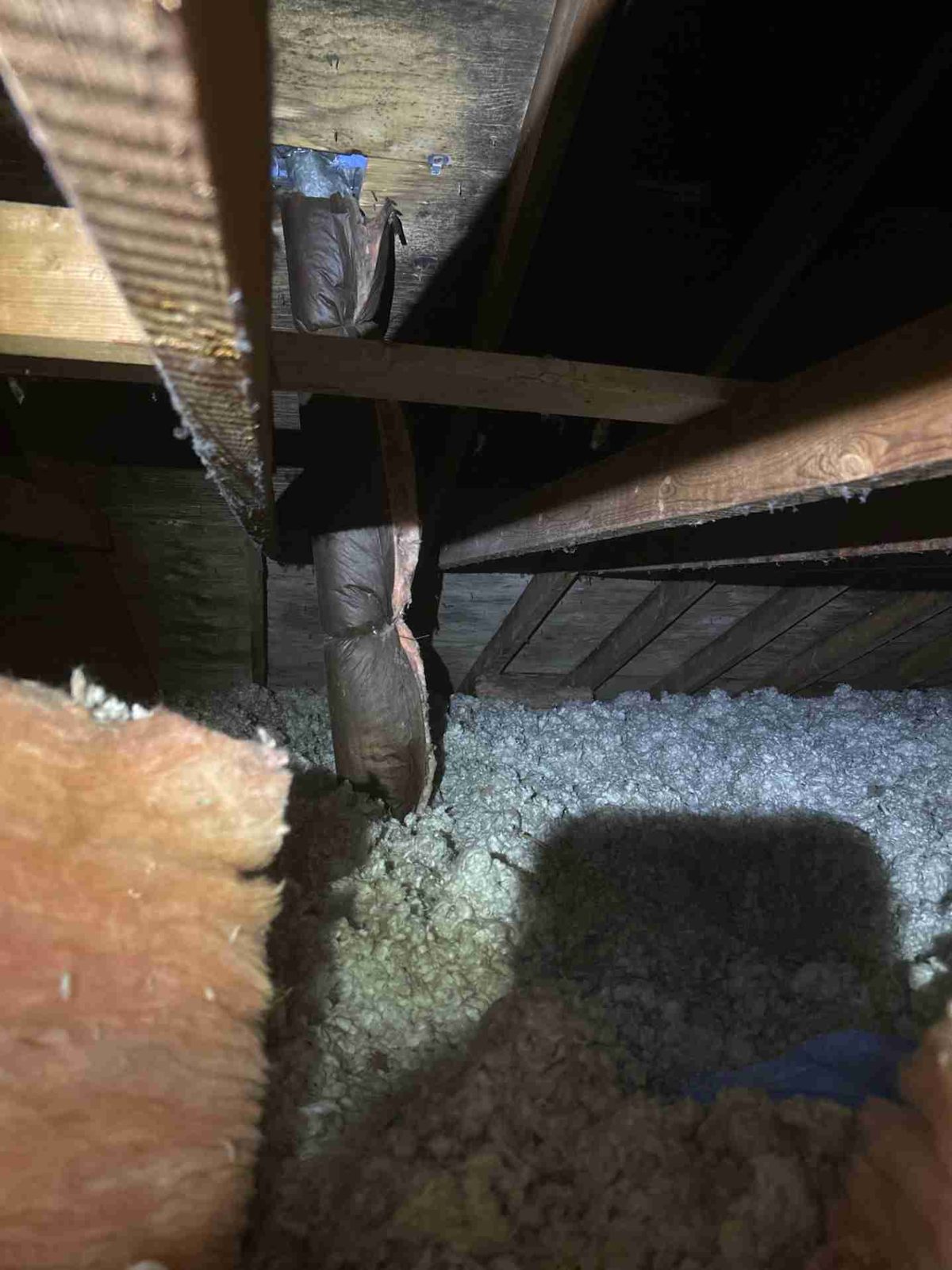
Caught early — Woodbridge. On a Vaughan-area inspection we found two bathroom fans venting into the attic. The homeowner had booked us about thin insulation (about 5 inches where today’s standard is 21.5). Because the moisture problem was caught before mold took hold, the fix was straightforward: run both ducts properly to the exterior, air-seal, baffle, and top up to R-60. One project, done.
Caught late — Mississauga. On a Mississauga job, a washroom fan pipe had been releasing shower air into the attic for years. The result: mold across roughly 200 sq ft of roof sheathing and insulation past saving. That job became a full reset — removal, 3-stage mold remediation, a new exterior vent for the fan, spray-foam air sealing, and a rebuild to R-60. Same root cause as Woodbridge; several times the scope.
How to check yours (five minutes, from the hatch)
- On a cold day, run the shower hot for ten minutes with the fan on, then look into the attic. Visible steam, damp insulation, or frost near a duct is your answer.
- From the hatch, count the flex ducts you can see and follow each one. Every fan in the house should reach a roof cap or wall/soffit termination designed for exhaust — not end at a vent opening, and definitely not end in the open.
- Look for the classic signature: a dark staining halo on the sheathing directly above where a duct points.
- Outside, find the roof or wall caps. Two bathrooms but one cap is a common tell.
No ladder appetite? This is a standard part of our free inspection — we trace every exhaust duct and photograph what we find.
The proper fix (it is not a bucket of caulk)
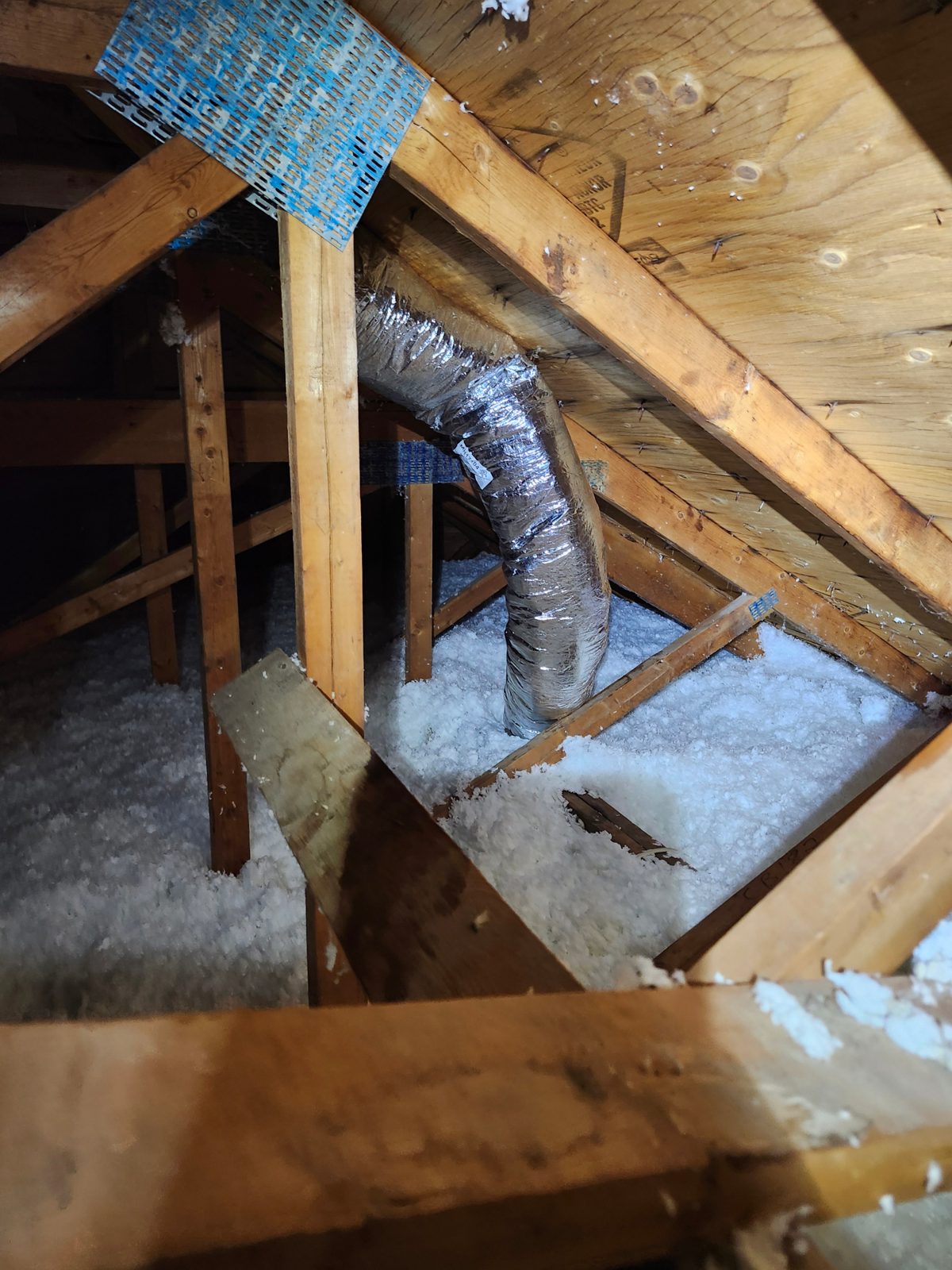
- Route the duct outside through a dedicated, damped roof or wall cap — insulated duct, as short and straight as practical, so moisture does not condense inside the run.
- Never into the soffit. Soffits are the attic’s air intake — exhaust dumped there gets pulled right back in.
- Treat any mold properly (clean, restore, seal — not paint over) and replace insulation that moisture has matted flat.
- Air-seal the fan housing and the other ceiling penetrations while the attic is open, then bring the insulation to R-60.
Not just bathroom fans — the whole exhaust family
While the ducts are being traced, two relatives of this problem are worth the same scrutiny. Kitchen range hoods ducted into the attic deliver moisture plus grease-laden air — rarer than the bathroom version, nastier when found. Dryer vents routed through the attic are usually connected, but every joint in that run is a lint-and-humidity leak waiting to happen, and a crushed or separated dryer duct fogs an attic impressively fast. And do not let a newer build lull you: we find disconnected ducts in 2010s houses too, where a duct was knocked loose by trades after inspection or was never clamped at the fan housing in the first place. The house’s age changes the odds, not the physics.
The takeaway
This is the cheapest expensive problem in your house: trivial to fix when caught, brutal when ignored. If you have never had eyes in your attic, make it this season — before the winter condensation cycle starts again.
Wondering what’s in your attic?
A free, no-obligation inspection with photos of everything we find — and a straight answer, even if that answer is “your attic is fine.”
Common questions
How do I know if my bathroom fan vents into the attic?
Is it against code to vent a bathroom fan into the attic?
What does it cost to fix?
Ali has spent 6 years in GTA attics — inspecting, sealing, and insulating them — and writes from what the crews actually find.