

Animals Were in Your Attic — Is the Insulation Ruined?
The scratching in the ceiling stopped — the wildlife company did its job, the raccoon or the squirrels are out, the entry point is sealed. Now you are looking at a quote (or a gut feeling) about the attic itself and wondering: is the insulation actually ruined, or is that an upsell?
Fair question. Here is how we actually judge it, with a real example you can look at.
What animals actually do to an attic
Three kinds of damage, roughly in order of severity:
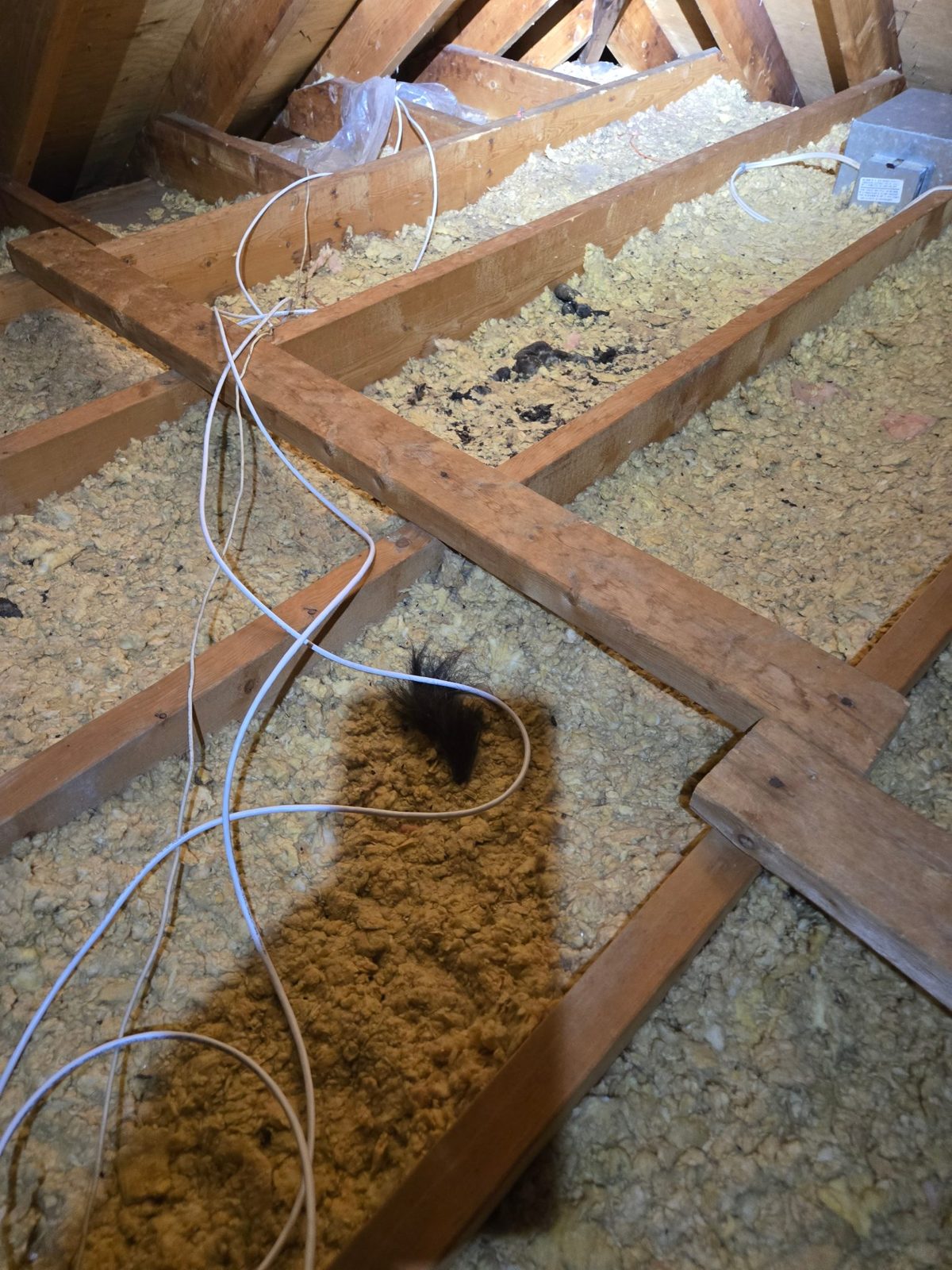
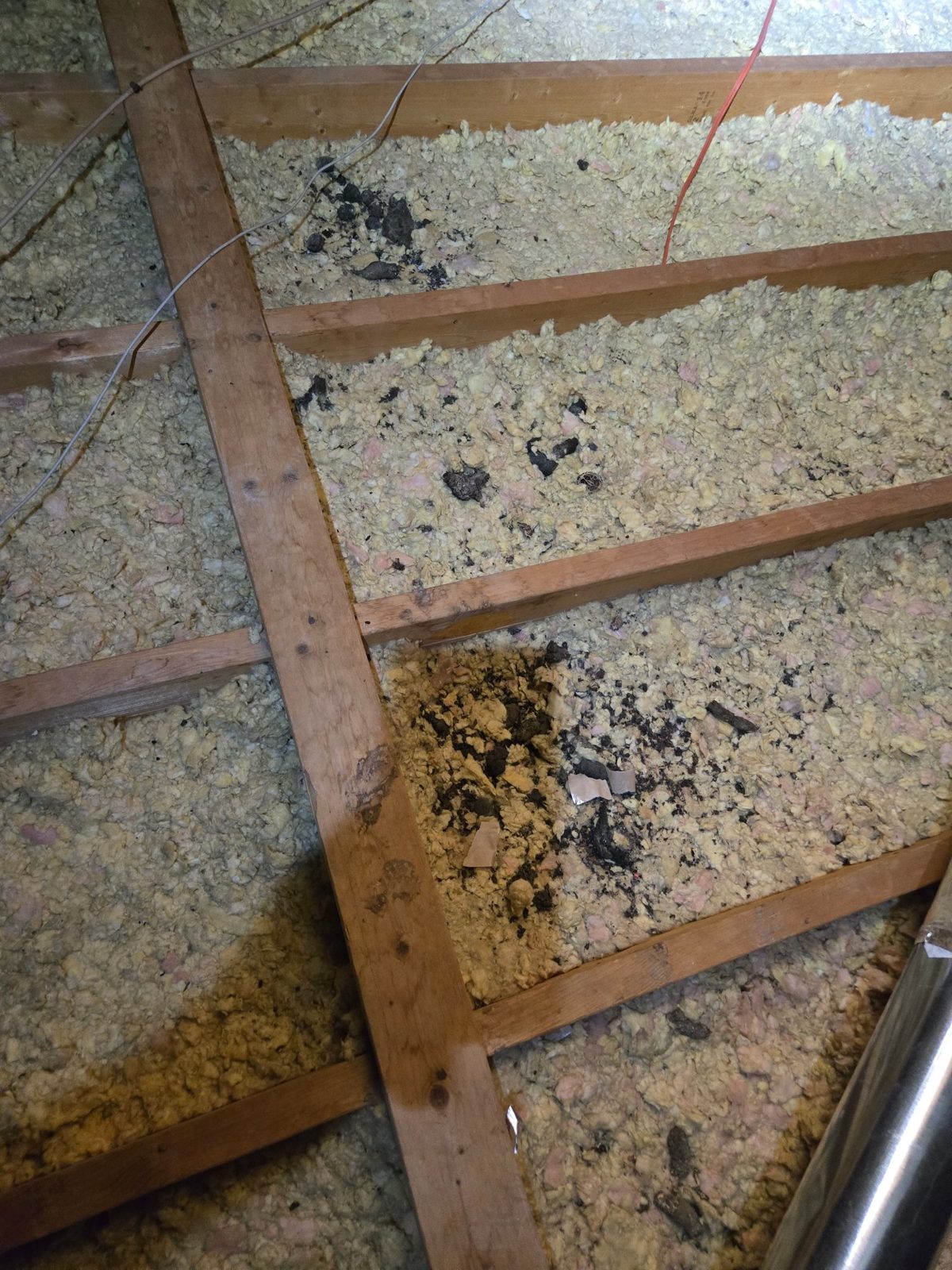
- Contamination. Droppings and urine accumulate wherever the animals lived — concentrated in latrine areas for raccoons, spread through tunnels and nests for mice and squirrels. Urine soaks into loose-fill insulation, which holds the odour and the bacteria. This is the part that makes material unsalvageable.
- Compression and displacement. Animals tunnel, trample, and shove insulation around to build nests. Fur, feathers, and nesting debris get mixed through it. Compressed loose-fill loses much of its R-value even where it is clean.
- Structural mischief. Chewed wiring (a genuine fire risk worth an electrician’s eyes), torn vapour barriers, damaged baffles and duct insulation.
Ruined or salvageable? The honest test
It comes down to extent, not existence. A mouse visit near one corner does not condemn 1,000 sq ft of insulation. Widespread droppings through the bays, urine odour, matted nesting areas, or material shoved off large sections of the ceiling — that does. The only way to tell is to physically inspect the bays, not glance from the hatch: contamination hides inside and under the top layer.
Our rule is the same one we apply to mold: we do not quote removal unless the photos justify it, and we show you every photo. Sometimes the answer genuinely is a partial cleanup plus top-up; when it is, quoting a full rebuild would just be padding the invoice.
A real one: the Erin Mills pest cleanup
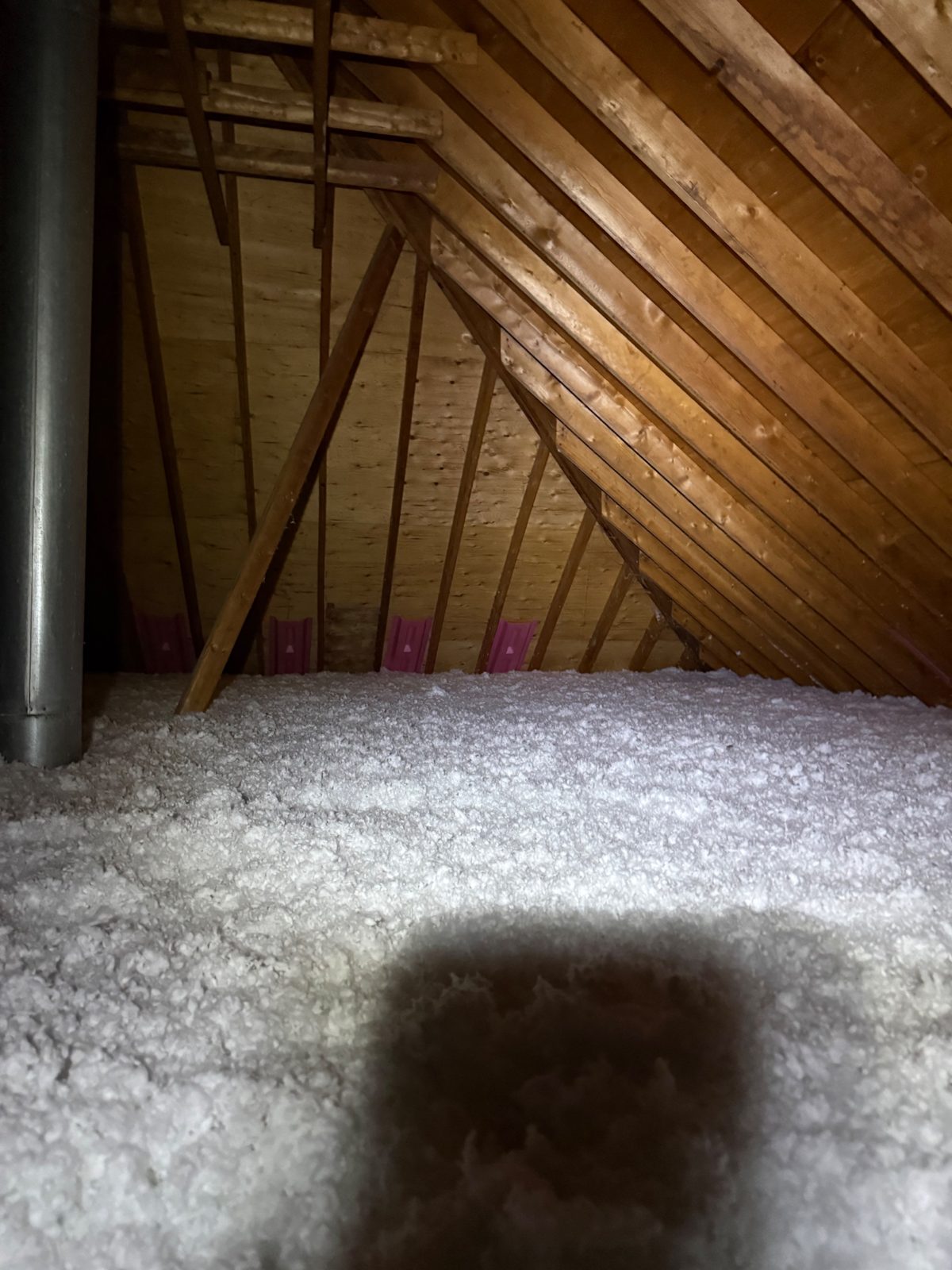
On a Mississauga (Erin Mills) project, animals had used the attic long enough to leave droppings through the insulation bays and nesting debris mixed deep into the material — on top of insulation that measured about 2 inches in places anyway. That one was not salvageable, and the photos made the case without a sales pitch: full removal, HEPA-grade cleanup and disinfection of the bays, air sealing (including the plumbing stack the animals had tracked around), new baffles, and a rebuild to a fresh, even R-60.
The part homeowners appreciate most is the ending: the attic is not just “clean again,” it is dramatically better insulated than it ever was — and an under-insulated attic being brought to R-50+ typically qualifies for a rebate of up to $1,250 through Ontario’s home energy rebate program, which takes real money off the cleanup-plus-rebuild bill. We confirm the amount at the assessment and file the paperwork.
Your order of operations
- 1. Wildlife out, entries sealed — a wildlife/exclusion company’s job, and it must be finished first.
- 2. Electrical check if there is any sign of chewed wiring.
- 3. Photographed attic inspection — ours is free — to map the actual extent of contamination.
- 4. Removal and disinfection of what the photos condemn, and only that.
- 5. Air-seal, baffle, rebuild to R-60 — and claim the rebate the upgrade earns.
A word on safety during cleanup
Droppings are the reason attic pest cleanup is a suit-and-respirator job, not a shop-vac Saturday. Disturbing dried droppings puts biological dust in the air — raccoon latrines in particular can carry roundworm eggs, and rodent droppings carry their own pathogen list — so proper crews work in protective gear with HEPA-filtered equipment, bag material for disposal rather than sweeping it, and disinfect the bays afterward. If a quote sounds cheap because the plan is “we’ll just scoop the worst of it,” that is the corner being cut.
How long does it all take?
Shorter than most people fear. Once the wildlife company has finished exclusion, a typical full sequence — removal, cleanup and disinfection, air sealing, baffles, and the R-60 rebuild — is commonly a one-to-two-day project for an average attic, done from the attic access with floors protected. You are not living in a renovation; you are mostly hearing a hose.
Get the photos before you decide anything
Whether your quote came from a wildlife company, another insulator, or nobody yet — the decision should be made from photographs of your actual insulation bays. That is a twenty-minute free visit. See the full case-study library for what our documentation looks like.
Wondering what’s in your attic?
A free, no-obligation inspection with photos of everything we find — and a straight answer, even if that answer is “your attic is fine.”
Common questions
Can contaminated attic insulation just be topped up over?
Do you remove the animals too?
Will insurance cover any of this?
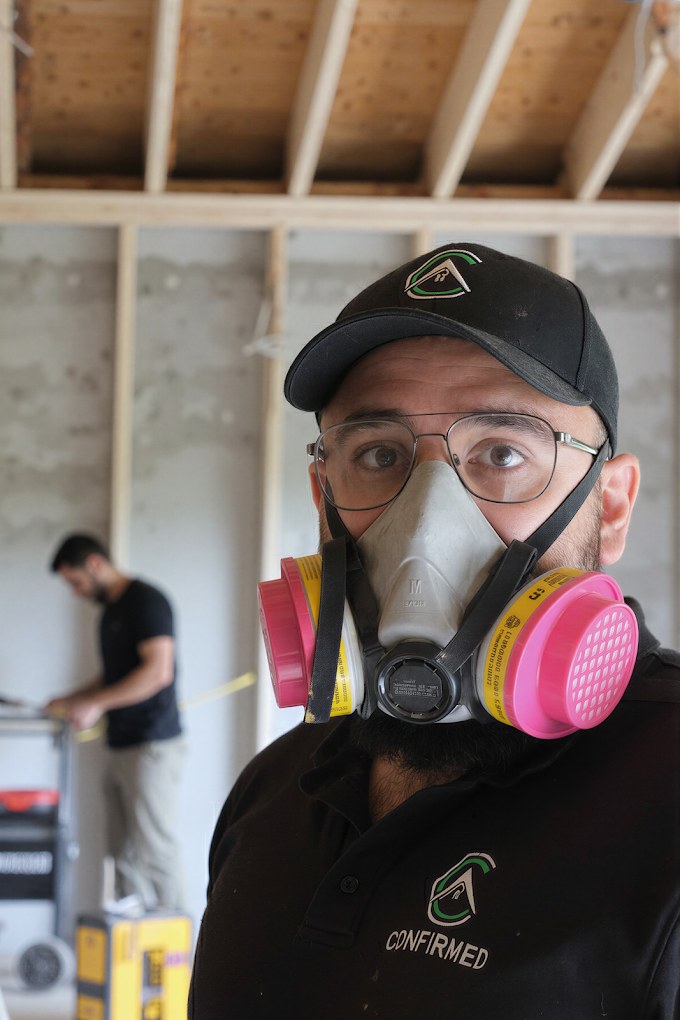
Ali has spent 6 years in GTA attics — inspecting, sealing, and insulating them — and writes from what the crews actually find.