

R-Value Explained: What R-60 Actually Looks Like in an Attic
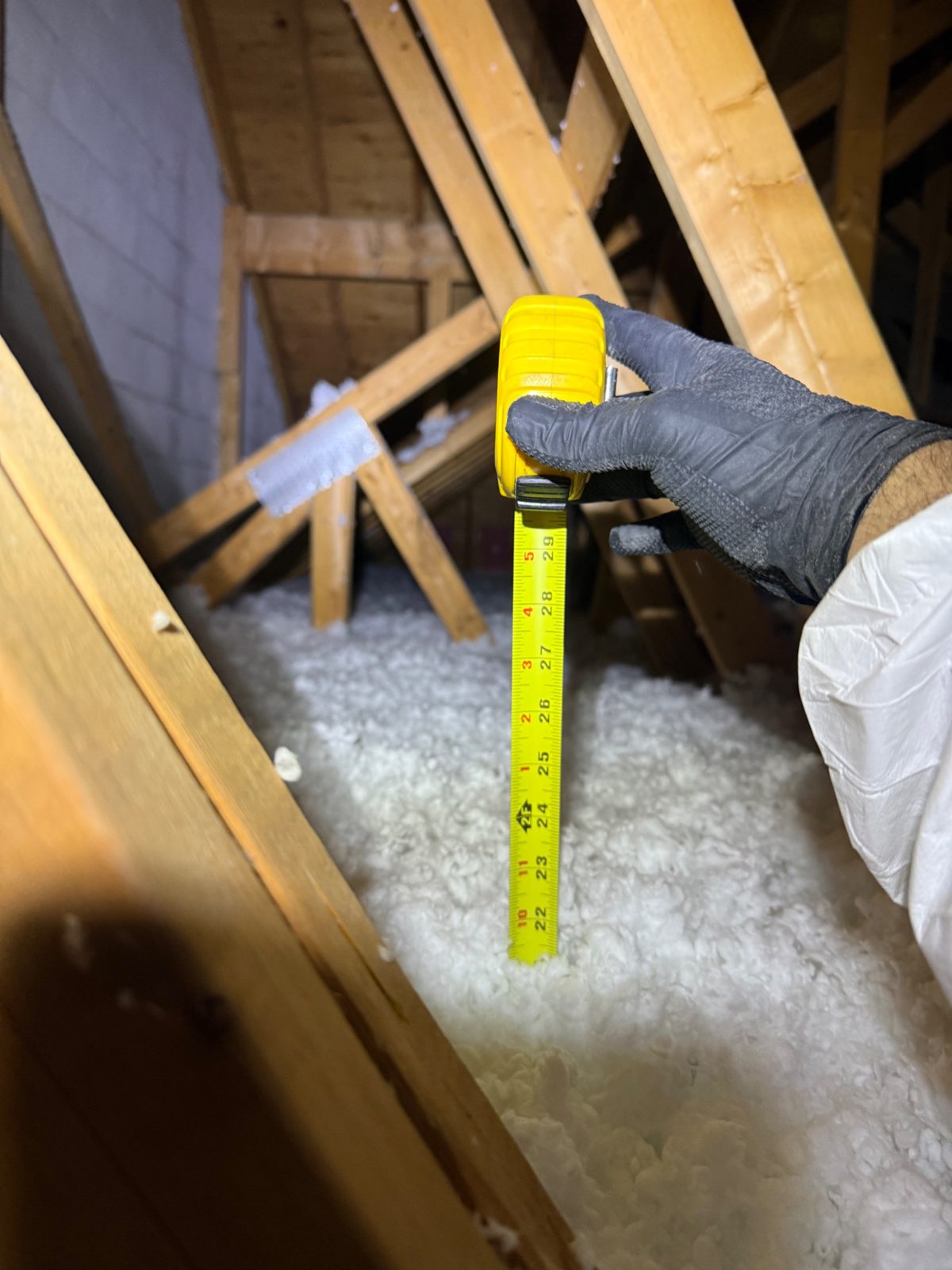
Every insulation quote, rebate document, and building-science article throws the letter R at you — R-12, R-50, R-60 — and most explain it, if at all, with a physics definition. Here is the practical version: what the number means for your house, why Ontario attics target R-60 in 2026, and — because it is the easiest way to understand it — what R-60 literally looks like with a tape measure in the picture.
R-value in one paragraph
R-value measures how much a material resists heat flowing through it. Higher is better, and it adds up: two layers of R-15 make R-30. Your ceiling’s R-value is the running total of whatever is stacked on top of it — which is why “how deep is it?” is the first question any honest assessor answers with a ruler, not a guess.
Depth is the whole game (by material)
Loose-fill attic insulation delivers roughly R-2.5 to R-3.7 per inch depending on the material — blown fiberglass sits around R-2.7 to R-2.8 per inch, blown cellulose around R-3.5. So the targets translate to depth like this:
- R-12 (the worst rebate tier’s ceiling): about 4–5 inches — what a lot of pre-1980 GTA homes still have.
- R-31: about 11–12 inches of blown fiberglass — a typical 1990s build after settling knocks it down further.
- R-50 (the rebate threshold): about 18 inches of blown fiberglass.
- R-60 (today’s standard, and ours): about 21.5–22 inches.
One catch: those per-inch numbers assume the material is fluffy and dry. Compressed, matted, or damp insulation delivers less than its depth suggests — which is why animal traffic and moisture do not just make an attic gross, they quietly delete R-value.
What it looks like: before and after
These two photos are from the same kind of measurement on real GTA jobs — a ruler standing in the insulation, no tricks.
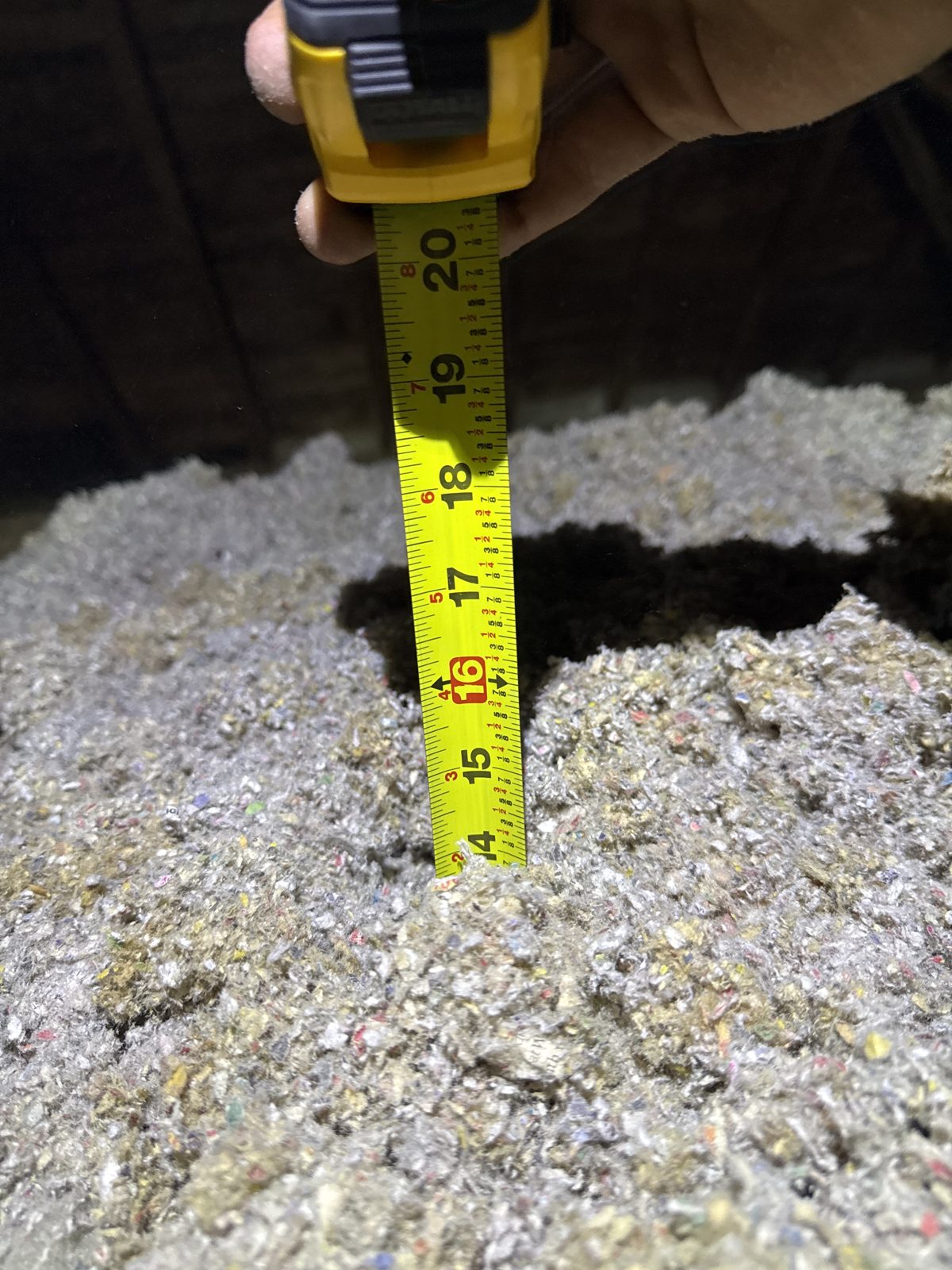
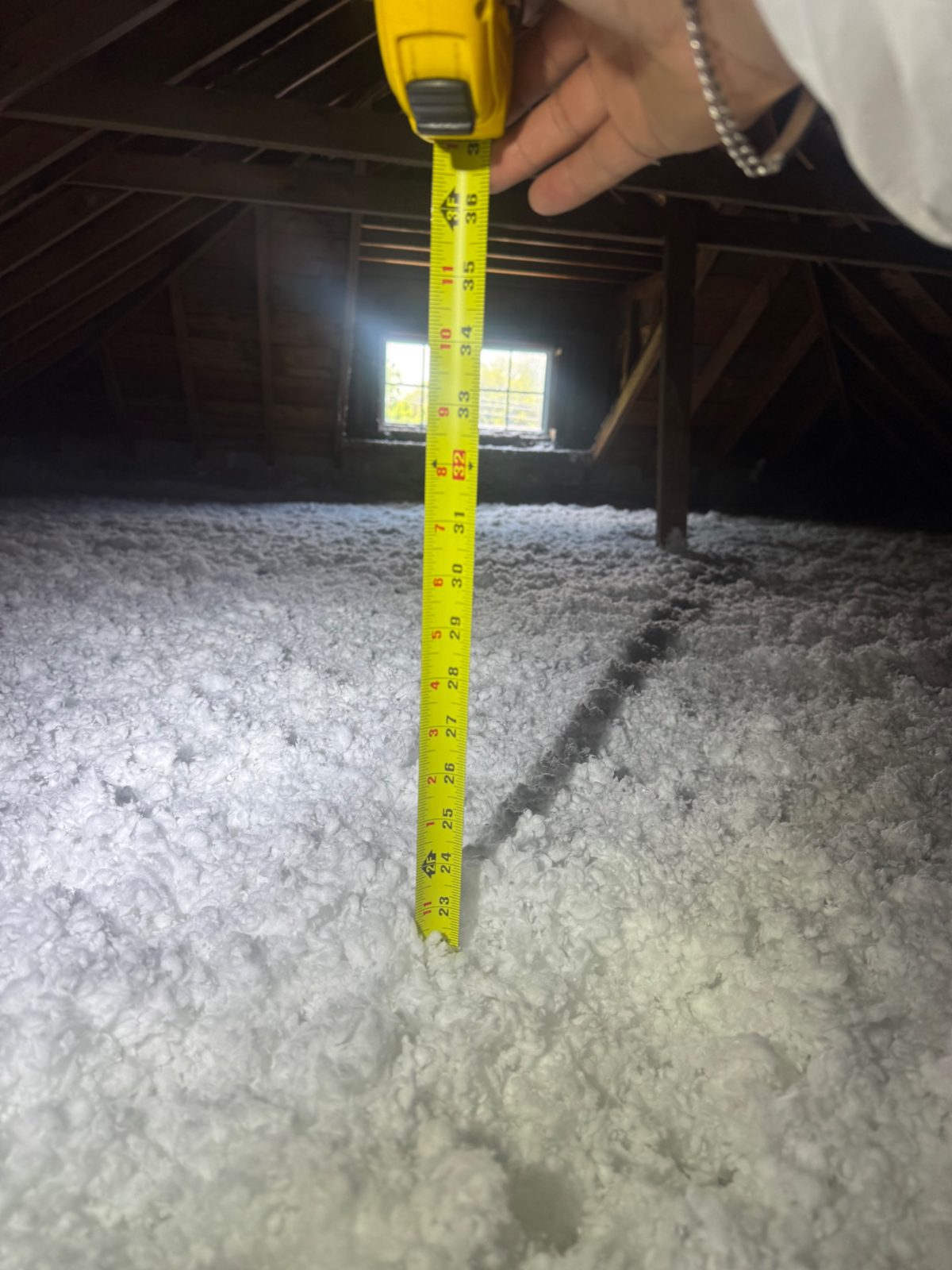
The full journey between those two photos — removal, mold remediation, spray-foam vapour barrier, ventilation, then the blow-in — is documented in the Lawrence Park case study.
Settling: why your 1995 “R-32” is not R-32 anymore
Loose-fill insulation is mostly trapped air, and gravity has been working on it since the day it was blown. Cellulose in particular can settle by a noticeable fraction of its installed depth over the years; fiberglass settles less but still compacts under its own weight, around fixtures, and wherever anyone has crawled through it. Add renovations — every pot light install, wiring run, and bathroom fan swap leaves trenches and footprints — and a 1990s attic that started at R-32 on paper is very often measuring in the low-to-mid 20s today. This is why we measure rather than trust the building permit: the attic tells you what it is, in inches, every time.
Fiberglass or cellulose — does the material matter?
Less than the depth does. Cellulose delivers more R per inch (about 3.5 vs 2.7), packs around obstructions well, and settles more; blown fiberglass needs more depth for the same R, holds its loft well, and does not absorb moisture the way cellulose can. Both perform properly when installed to the right final R-value over a sealed ceiling with protected ventilation. When you compare quotes, compare the finished R-value and what sealing/venting work is included — not the brand of fluff. And topping up fiberglass over old cellulose (or vice versa) is completely fine; the R-values stack.
Why the standard became R-60
R-60 is where the attic stops being the weak point of the envelope in a climate with Toronto winters and Toronto summers. Past it, returns diminish — going from R-12 to R-60 removes the great majority of ceiling heat loss, while going from R-60 to R-80 shaves only a sliver more, which is why nobody serious pushes past 60 in our climate. Below it, the ceiling is measurably the biggest heat-loss surface in most houses. It is also comfortably past the R-50 threshold that Ontario’s home energy rebate program requires an upgraded attic to reach — upgrades from R-12 or less earn up to $1,250, with lower tiers of up to $1,000 and $800 for attics starting higher. (Amounts are maximums; we confirm your tier at the free assessment and file the paperwork.)
Why R-60 alone is not the finish line
A perfectly deep attic can still underperform if house air leaks into it. Air moving through insulation carries heat right past all that R-value — through pot lights, plumbing stacks, duct boots, and hatch edges. That is why our jobs air-seal the ceiling and protect the soffit airflow with baffles before the blow-in, and why we measure and photograph the finished depth on every project (see the Willowdale job for the full sequence). Depth you can verify, sealing you can see, numbers that mean something.
Find out your number
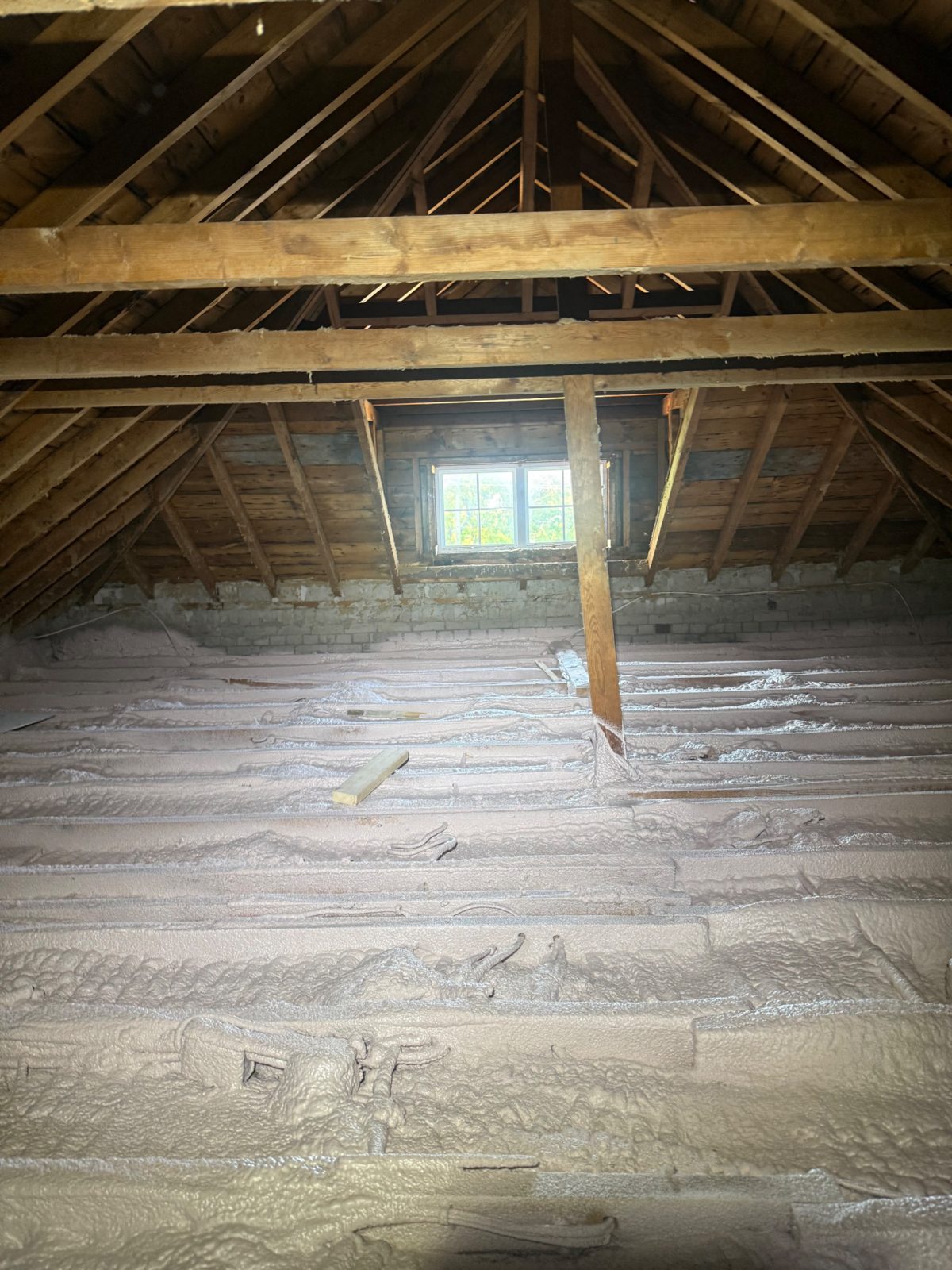
Whatever your attic measures today, it is a twenty-minute free visit to find out — with a ruler, a camera, and a straight answer about whether you are at R-12 or already fine. If you are fine, we will tell you that too.
Wondering what’s in your attic?
A free, no-obligation inspection with photos of everything we find — and a straight answer, even if that answer is “your attic is fine.”
Common questions
What R-value should an attic have in Ontario?
Is R-60 overkill for an older house?
Can I measure my attic’s R-value myself?
Ali has spent 6 years in GTA attics — inspecting, sealing, and insulating them — and writes from what the crews actually find.