Toronto — Lawrence Park
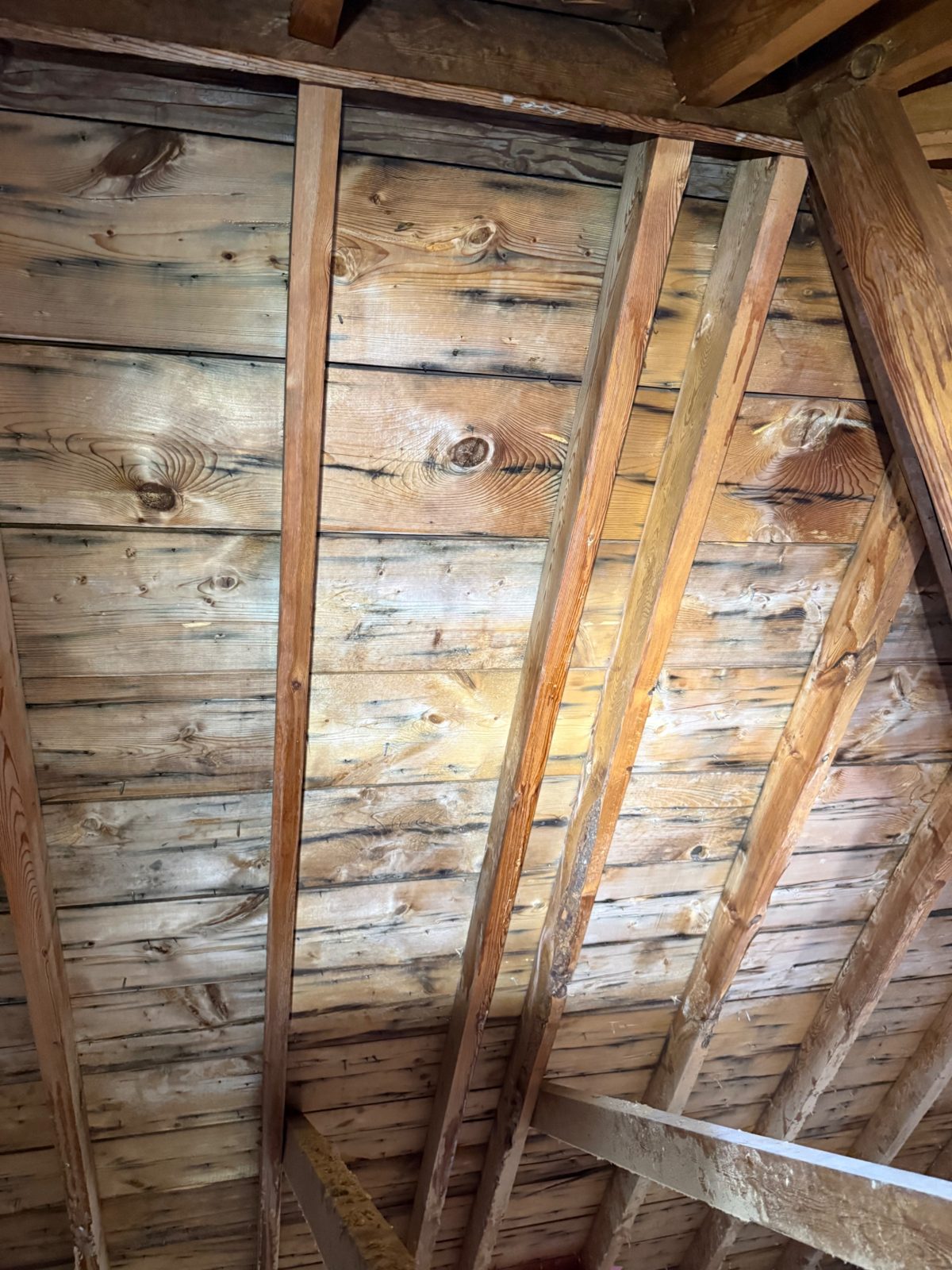
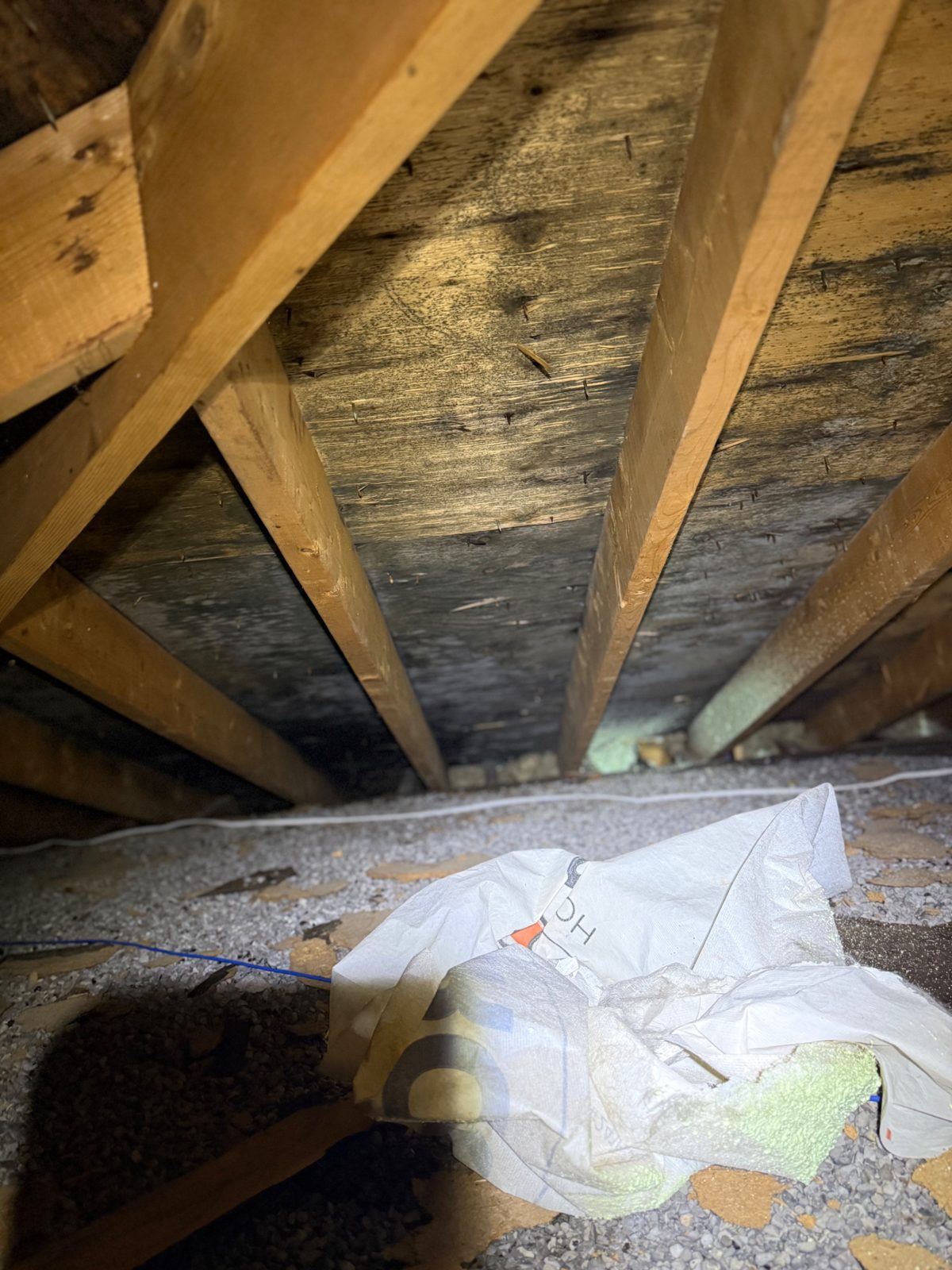
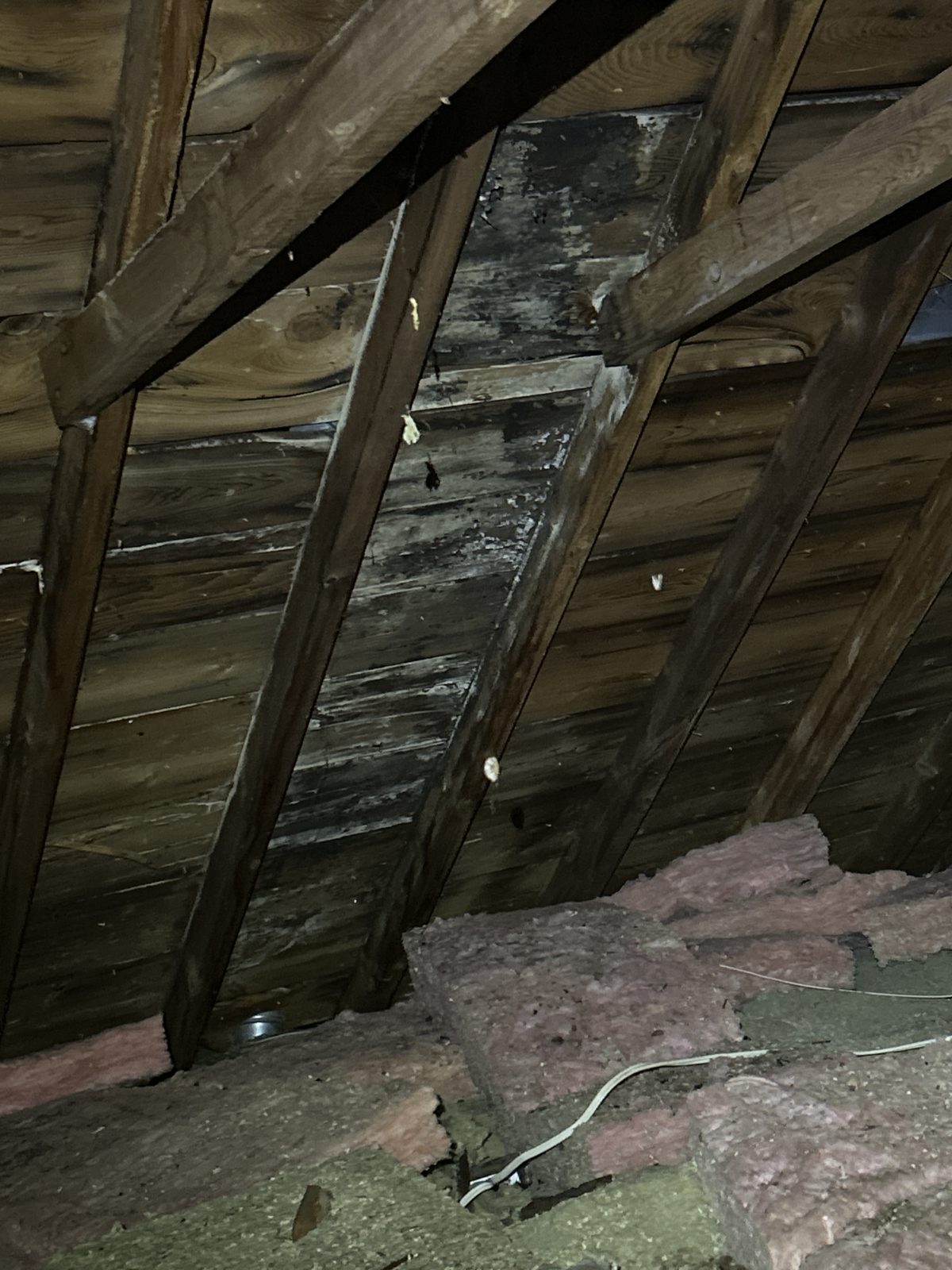
A musty smell upstairs turned out to be 350 sq ft of mold on the roof sheathing
Read the full case study →


Whether you spotted it yourself or a roofer just told you it’s up there — before anyone sells you a number, you deserve to know what attic mold actually is, what proper remediation involves, and what it is not. We remove the mold, restore the wood, and fix the moisture problem that grew it — and we photograph every step.
Moisture from below. Warm, humid house air leaks into the attic through every unsealed pot light, plumbing stack, and ceiling gap — and in the worst cases, bathroom fans dump shower steam directly into the attic. That moisture condenses on cold roof sheathing all winter. It’s the #1 defect we photograph, and the fix starts with air sealing the ceiling plane.
Dead airflow. An attic dries itself by breathing — air in at the soffits, out at the roof vents. When soffits are blocked by decades of shoved-in insulation (or were never open to begin with), moisture that gets in has no way out. In one Scarborough attic, that combination stained virtually the entire roof deck.
Plenty of companies will “treat” attic mold with a sprayer and an invoice. Proper remediation is physical work done in a controlled sequence:
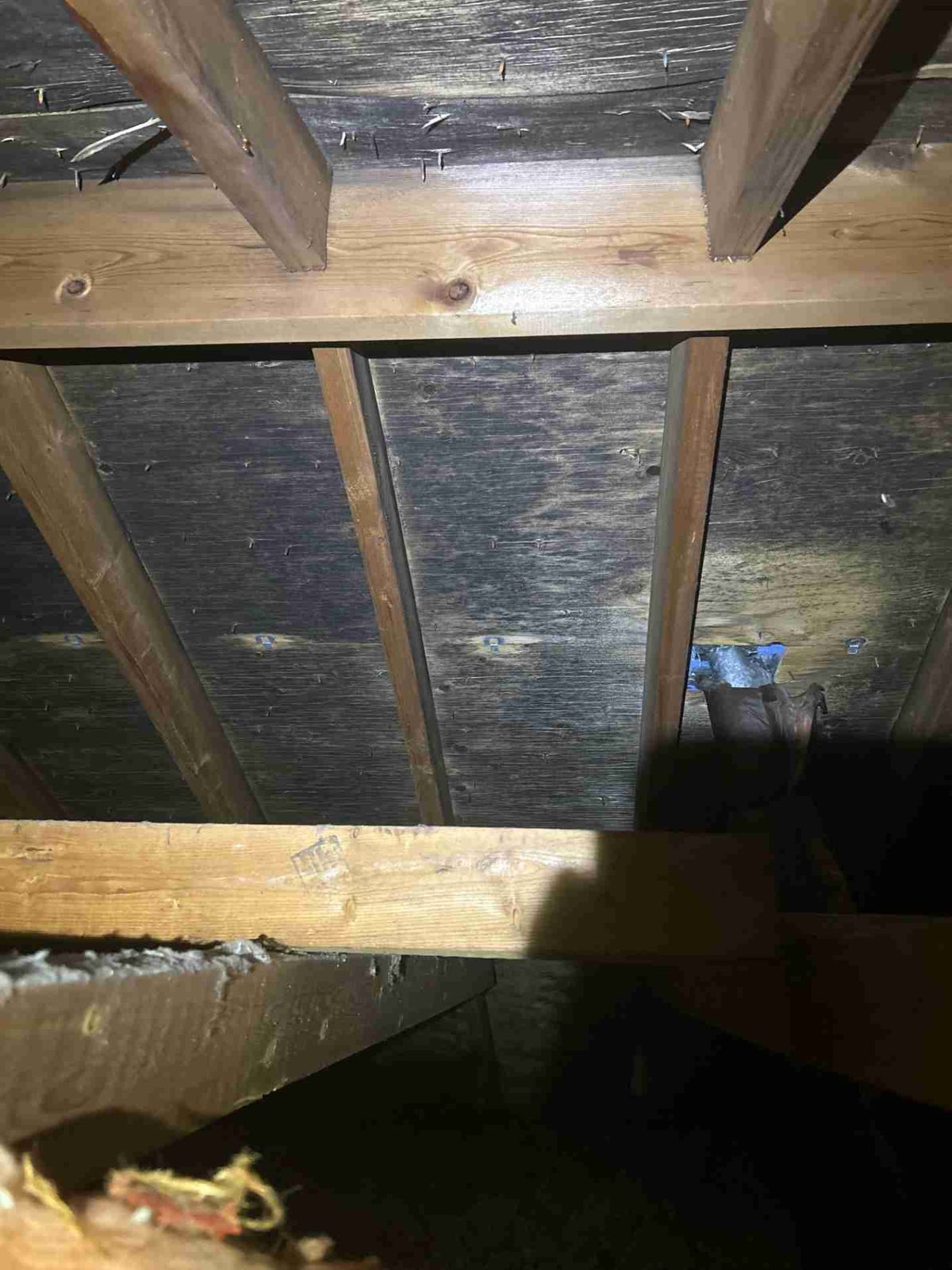
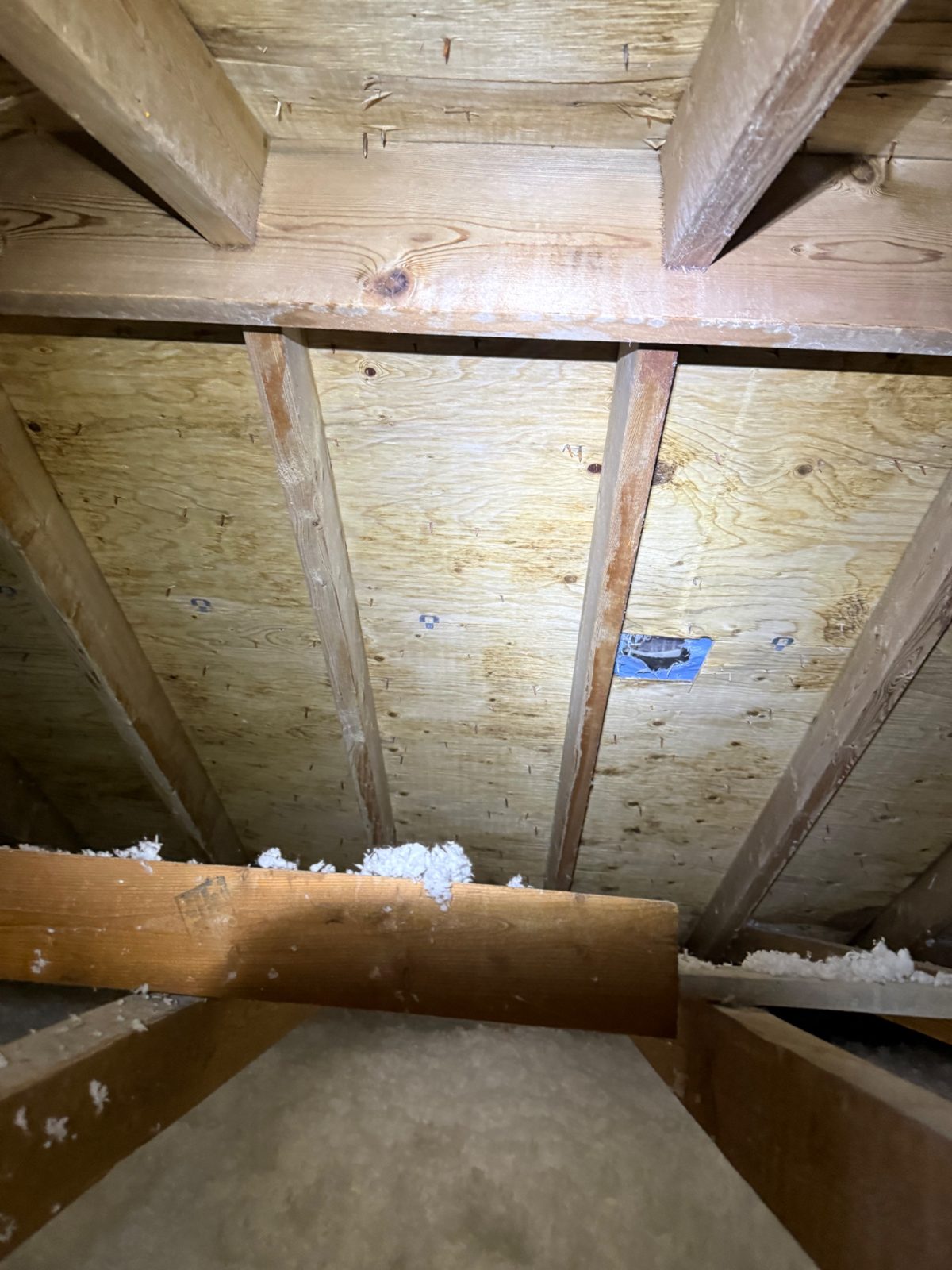
Contaminated insulation is bagged out, then the mold is physically removed from the wood with botanical cleaning agents — scrubbed and extracted, not just misted. The goal is removal, not disguise.
Stained sheathing and rafters are restored so the wood is clean and sound again — you can see the difference in our before-and-after photos, and you’ll get the same photos of your own attic.
The restored wood gets a salt-based protective sealant that makes the surface hostile to regrowth — insurance on top of the cause fix, not a substitute for it.
Then the part most companies skip: we fix what grew the mold. Bathroom fans get re-routed to proper exterior caps, blocked soffits get opened with baffles at every rafter bay, the ceiling gets air-sealed — and the attic is rebuilt with fresh insulation to R-60. A remediation that skips the cause is a subscription, not a repair.
Read the full case study →
Read the full case study →
Read the full case study →
Stain-blocking paint over live mold is the industry’s favourite shortcut: the attic looks fixed for the photos, the moisture keeps condensing, and the problem regrows behind a white surface where you can no longer see it. If the quote doesn’t include physically removing the mold and fixing the moisture source, it isn’t remediation.
Mold testing has its place — but when mold is visible, a $500 report confirming it rarely changes what has to happen next. We’ll tell you when a test is genuinely worth it and when it’s an upsell. More on that in our honest take on attic mold.
We remediate attics in Toronto, Scarborough, North York, Mississauga, Etobicoke, Vaughan, Brampton, and Richmond Hill — older housing stock with original ceilings and tight eaves is where we find the most of it.
The free inspection documents the mold, measures the moisture sources, traces every exhaust duct, and photographs all of it — then you get one flat quote for the fix. No pressure, no scare tactics.
A Confirmed technician visits the property, photographs everything, and gives you a straight answer — free, no obligation.
—
We couldn’t lock that time online. Nothing lost — call (647) 507-4072 and we’ll book you in directly.
—
Tap a highlighted day, then pick a window.
—